Showing posts with label poverty. Show all posts

Saturday, January 22, 2011

Native American Unemployment

R.M. Arrieta has an important article on the (still) most forgotten about people in this country, Native Americans:


  • By the first half of 2010, the unemployment rate for Alaska Natives jumped 6.3 percentage points to 21.3%—the highest regional unemployment rate for American Indians.
  • Since the start of the recession, American Indians in the Midwest experienced the greatest increase in unemployment, growing by 10.3 percentage points to 19.3%.
  • By the first half of this year, slightly more than half—51.5%—of American Indians nationally were working, down from 58.3% in the first half of 2007.
  • In the first half of this year, only 44% of American Indians in the Northern Plains were working, the worst employment rate for Native Americans regionally.
  • The employment situation is the worst for American Indians in some of the same regions where it is best for whites: Alaska and the Northern Plains.
Truthfully, in this history of this country, Native Americans have never had as much power and money as they do now. But most of that comes from casinos, which means that it is extremely unevenly distributed. Some tribes, usually near large metropolitan areas and on interstate highways, have gotten rich. But the rest are mostly still stuck in long-term poverty.

What's remarkable about this is that we as a society still ignore Native Americans. After 1890, they disappear from our national narrative, only to reappear in the 1960s as idealized people in harmony with nature and in the 1990s as purveyors of gambling. But despite the national realization that we screwed over Indians, we have not followed up with any sort of national anti-poverty programs designed give Native Americans opportunities. Part of this is the general selfish attitude of early 21st century America which has led to cuts across the board, but Native Americans aren't even part of the national conversation.

And that's really screwed up.

Saturday, December 25, 2010

Historical Image of the Day


"Helping the Poor--Gratuitous Distribution of Coal by the City--Cherry Street," 1877

You have to love the generous and humane attitudes of the Gilded Age. Good thing we are heading back there. I can already see Republicans bemoaning giving free lumps of coal to the "undeserving poor."

Wednesday, September 09, 2009

Environment vs. Social Justice

Via Africa Unchained, Alex Perry's piece in Time on the horrible leadership of recently deceased Gabonese president Omar Bongo brings to mind one of the most difficult contradictions within environmentalism--sustainability versus social justice.

A lot of activists don't like to frame this discussion as oppositional. It doesn't have to be. But in the developing world, it usually is. From an environmentalist perspective, Bongo is arguably the best leader in African history. He has saved a massive amount of rain forest in his country which today is among the most biologically diverse and unexplored places on the planet. It's my dream to visit there. But Bongo did this only by ensuring that just enough oil money got to the people to prevent them from entering the region. Moreover, as discontent rose in later years of his regime, he began to back off from protecting the forest and started building dams and allowing other development.

On the other hand, you have any number of left of center leaders in Latin America, Africa, and Asia who promise land reform for the poor. It's hard to oppose this. Governments and the corporations who own them have ignored and exacerbated poverty, concentrated land in the hands of the few, and given no opportunities for the masses of poor to improve their lives. But land reform in practice rarely brings anyone out of poverty and is almost always an environmental disaster.

The reality is that land conservation has usually worked best when that land is held in large segments by wealthy people. Writing that makes me kind of sick because it goes against everything I feel about social justice. But it's true. For example, Zimbabwe was a real hot spot to visit in the 1980s and early 1990s because it's wildlife populations were so high. But that came at a cost--they were high because whites who controlled most of the land were still controlling it despite the fact that the white supremacist government they supported had fallen. Robert Mugabe started seizing that land in the early 2000s to redistribute it to the poor. Of course, Mugabe's nation is a disaster in many ways related to him, but in this particular case, it did little to help the poor out, it caused massive and rapid deforestation, and a significant decline in wildlife. To take a very different example, this weekend I visited the Tallgrass Prairie Preserve in north central Oklahoma. This land is the largest remnant of tallgrass prairie left in the world. It's amazing and beautiful. It also survived because it was part of a large ranch owned by one family for generations. They never had to break it up for money and they never had to plow the land. Had that land been in small farms, it's extraordinarily unlikely that it would have survived.

So what do we do about the poor of Gabon who desperately need to improve their lives? Should the forest be opened to them on some level? And what about subsistence farmers in Central America invading national parks in order to continue their traditions of slash and burn agriculture? It's a very difficult question. In the end, I find myself falling on the side of forcible environmental protection combined with environmental education and big time anti-poverty and job creation programs. I don't like finding myself on this side of the fence, but when those species are gone, they are gone forever. Were there evidence that opening up these lands made any difference in the poverty of the people, I might well feel differently, but there's not. Perhaps ecotourism is the best answer, but that's fraught with all sorts of other problems.

So I have no good answer here. But I'm trying to work something out in my head that could provide for both environmental protection and making people's lives better. If the two are entirely separate, I have a hard time believing that either will win.

Wednesday, January 28, 2009

Another Reason to Bag on Slumdog

I am enjoying the backlash against the wildly overrated Slumdog Millionaire. This is a really good (if overly political reason) to feel even better about it.

Despite all the money the movie has made, the small children in it are still living in abject poverty.

Both children were found places in a local school and receive £20 a month for books and food. However, they continue to live in grinding poverty and their families say they have received no details of the trust funds set up in their names. Their parents said that they had hoped the film would be their ticket out of the slums, and that its success had made them realise how little their children had been paid.

Ismail is in fact “worse off” now, as his “family’s illegal hut was demolished by the local authorities and he now sleeps under a sheet of plastic tarpaulin.” Ali lives nearby — in a “hut.” A Fox Searchlight spokesperson said he is “proud” of their treatment and boasted, “For 30 days work, the children were paid three times the average local annual adult salary.”

Classy.

Wednesday, September 17, 2008

Historical Image of the Day


Poor House/Farm. Huron, South Dakota, 1913.

This image comes from a postcard of the time. Why someone would want a postcard of a poorhouse, I don't know. But there were postcards of basically everything back then, including lynchings. I should investigate this phenomenon further. I will when I have time, i.e., after I die.

Monday, June 09, 2008

Brazil's Middle Class Growing

According to this report, issued yesterday in O Globo, Brazil's middle class is on the rise. According to the study cited in the article Brazil's "Classe B" (Brazil census and data measurements divide socio-economic standards into five classes; "Classe B" is the second 20% of income levels in Brazil), which is marked by a monthly income of 3,040 reais/month (US$1900/month) has swollen to almost 20 million people, or roughly 11% of society; home ownership among this group has grown nearly 80% in the last 5 years. The study cites the growth of personal as well as national incomes in Brazil under Lula's administration as the main reason for this growth. If the report is accurate, there are some truly encouraging things to be drawn from this, including people improving their class status, and consumer goods becoming more available to the populace (something I saw myself while in Brazil).

I actually was planning on writing about this beforehand, but Randy's comments in this thread merit some remarks, too. While I don't fully disagree, I don't fully agree, either, for a number of reasons. First, I never saw Lula as being the savior that many intellectuals and people from the left felt he would be when he was first elected in 2002 (and to be clear, I'm not accusing anybody I know in the US of having been like this). Too many people in Brazil turned on Lula when he didn't immediately launch a major revolution that solved Brazil's poverty issues immediately, which I found not only totally unfair, but completely unrealistic. While I wouldn't go quite so far as to say that poverty in Brazil is "intractible" (I feel that A) poverty probably can never be fully eliminated anywhere, just due to simple human nature to create inequalities; and B) (and rather paradoxically) I feel "intractible" suggests the current conditions can never be overcome, and I'm not willing to say that, either), it certainly faces such severe obstacles within society, that no president, Lula or anybody more radical (or counter-radical) could ever solve the problem of poverty in Brazil so quickly. It's ok to hope for important changes, and to even expect them, from Lula or other leftist leaders, but to expect that the extreme poverty in Brazil and, more importantly, social stigmas against the poor among the middle- and upper-classes could be eliminated under one president, strikes me as impractical. This is why I found the leftists and intellectuals' disillusion with Lula so frustrating when I was in Brazil; while he was and is certainly not perfect, the demands they were placing on him were so unrealistic as to be unachievable by anybody short of Jesus Christ himself, and even then, he'd have his hands full.

Secondly, I think this poll points again to how much the standard of living for people has improved during Lula's administration. Yes, it's just data on the 2nd-highest 20% of incomes in Brazil. Still, the fact that Classe B has grown so dramatically, and that access to consumption based not just on home ownership but on household goods has also increased, is promising, and does point to how much has been done in Brazil. Since Lula became Brazil's first "leftist" president since 1964, Brazil has seen unprecedented growth.

That said, I don't fully disagree with Randy, either. The report doesn't mention anything about Brazil's poorest, both in urban and rural settings, but it doesn't have to. Those people are still mired in poverty in a country with one of the greatest levels of economic inequality in the world. There are still plenty of landless, and plenty in the favelas, and any gains they may have made in the past few years are minor in the face of their situations.

However, I'm not quite willing to lump this on Lula, either, and not out of any particular partisanship. As I've said before, the problem runs far deeper within the social fabric, where poverty is treated as a criminal activity, and the poor little help or sympathy from the middle classes. In this atmosphere, the police can and do act not just with impunity, but with the tacit (and sometimes explicit) approval of wealthier elements of society and the media, garnering outrage and protest only when they torture and repress members of the middle class. Simply put, there is neither tolerance for nor acceptance of the poor and economically marginalized in Brazil. The fact that so many people have tried (and succeeded) to improve their class status alone hints at the social stigmas tied to being part of the lower classes. Like I said, while I wouldn't go so far as to say "intractible," the poverty issue in Brazil is indeed grim.

But again, I think this is where it is important to separate presidential politics and power from broader political and sociological processes. As Brazilian intellectuals failed to recognize, Lula, working within a presidential parliamentary system where white-collar politicians and much of the middle class (including many of my in-laws) irrationally hates him for having simply been a metal-worker, could only get so much done. Poverty is undeniably severe in Brazil, and police treatment of the poor, urban or rural, is abominable and unforgiveable, yet illicitly and explicitly approved of in Brazil.

When the time comes to evaluate Lula's administration, I suspect (though I may be wrong) there will be many areas where he will be legitimately deemed as a disappointment, if not a failure, particularly on environmental issues. However, I think that, at the end of the day, his administration has been nothing short of a major success on economic matters. That the poor are treated so brutally is not so much a symptom of Lula's failures as a symptom of the severe classism and racism that still pervade much of Brazilian society, issues which any president will be hard-pressed to solve by himself.

Friday, November 02, 2007

Favelas, Landslides, Traffic: More Consequences of Brazil's Social Inequalities

Before I came to Brazil, my wife would comment on how hard it rained here and how flooded the streets would get, but I had started to believe she had exaggerated. It had rained here since I got here, and it had rained hard, but I'd never seen anything of the Biblical proportions that she would describe to me.

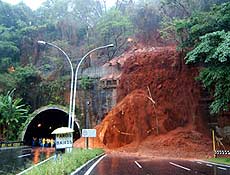
However, that rain happened last week. In the course of about 3 hours, parts of Rio saw 4 inches of rain. Streets were so flooded that the water came up to the bumpers (and over them) of cars in some parts of Rio. The three-lane road I live on became a one-lane road, as cars could not safely drive in either the left nor right lanes due to the flooding. And, in the biggest mess, there was a giant landslide that blocked off the Rebouças Tunnel (a nearly mile-and-a-half long tunnel), which goes right under Corcovado (the mountain with Jesus on it), and is one of the major north-south arteries in Rio, closing the tunnel for over a week and resulting in the kind of traffic jams and packed subways I've never seen in my life (one day, traffic was backed up for at least 8 miles along multiple roads.

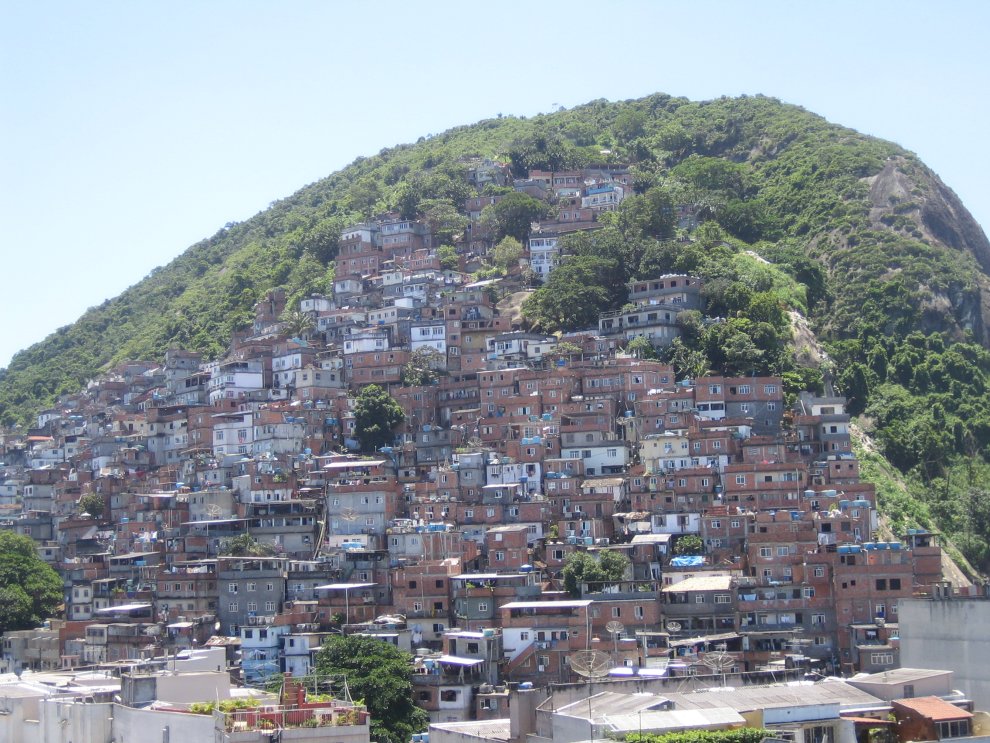
Rebouças has since reopened, but the problem of landslides continues. Not only did Rio's right-wing mayor, César Maia, apparently stop 64% of the land-containment projects that would stop such landslides. However, there has also been a consideration of how urban growth has factored into the risk of landslides here. As is known, Rio's favelas have spread out along the mountains of the cities, where the high-rises of the wealthier cannot be reasonably built. The problem is real enough that even O Globo (the largest media conglomerate of Brazil and the bastion of right-wing middle- and upper-class ideology) deigned to write about the favelas beyond the simple narrative of drug "wars". However, the approach is not surprising. The article frames the question simply - the growing number of favelas can, is, and will continue to affect the way the environment is impacted (though the point is in no way stressed in environmental terms) and will result in future landslides like the one that slowed the city down for 10 days.

Of course, this ignores the larger issue at hand: why the favelas are growing. It's no secret that the wage gap in Brazil is one of the worst in the world (regardless of how you're measuring, it falls in the top 3 worldwide, and often is number one). It's also no secret that, since the 1950s, the rural-urban exodus has been massive (going from 30-70% urban rural to 70-30%). With the wealth increasingly concentrated in the hands of the few, not just urban but rural as well, the rural poor have been forced to move to the urban centers to try to survive. However, the options in these urban centers (particularly Rio and São Paulo) are not great, based on existing classist and racist structures (while it's not universal, let's not forget that, in Brazil, oftentimes the poorer you are, the "browner" or even black you are). Thus, the poor, over the last 50 years, have increasingly become poorer, and have increasingly concentrated in urban centers.

(And, while it's tangential to my concerns here, let's not forget the impact this growth has environmentally. Not only do many of these favelas lack basic sanitary services. They build upon mountains, resulting in deforestation on the micro-level, which in turn not only can lead to more landslides but also damages the very delicate balance of the gradually-recovering Atlantic rainforest, which even exists here in Rio, where the Tijuca forest is the world's largest urban forest. Thus, these are not strictly economic and social problems; their environmental impact is longterm and damaging as well).

And yet this kind of consideration of the basic economic structures and inequalities in Brazil are not emphasized or investigated, in the media or by society at large. The growing favelas are not a symptom of the economic and social problems facing Brazil; they are a cause of transit problems in Rio. I know I've hit on this repeatedly, but it's worth emphasizing once again, and this article sheds light on yet another example of Brazil's refusal to ask questions and deeply consider the problems of poverty, race, and class here. But, as much as the media, the middle class, and the elites, here in Rio and elsewhere, may want to ignore it, the simple truth remains that, until society can try to reduce the wage gap and offer humane conditions to all of its citizens, these (relatively minor yet scandalous to the wealthy) transit problems will never go away.

Friday, September 14, 2007

Modern Day Quilombos and the State in Brazil

Upside Down World points us to this article on the conditions of modern-day Quilombo communities in Brazil. Historically speaking, quilombos in Brazil were communities of runaway slaves and ex-slaves in Brazil who made their way to the interior, establishing their own homes, communities, and lifestyles far away from Portuguese settlement. However, these communities did not go away with the abolition of slavery in 1888, and the racial inequalities of Brazil remain obvious in modern day Quilombos today. Virtually none of the Quilombos owns its land. Malnourishment is extreme, as is the poverty (the article claims 91% of quilombo residents don't make 190 dollars a month, and that's below the minimum wage in Brazil. And remember - in Brazil, incomes are generally measured in how many minimum wages you make a month - i.e. two, four, six minimum wages, etc. - so the fact that they are below one minimum wage speaks volumes of their poverty). And, not surprisingly, 70% of the population of the quilombos is of African descent (and, not coincidentally, these communities are ignored by the majority of Brazil's media and population).

While I'm all for the government trying to help these communities in areas like nutrition, land-ownership, and improved living conditions, I'm not sure how helpful it will be. First, there's the simple issue of efficiency - while the ends are noble, the means are complex. Added to this, there is the fact that, in order to be recognized and gain title, "the process involves experts ranging from anthropologists to land surveyors." I'm simply not quite sure how the quilombos (who again, don't exactly have easy access to things like telephones, internet, and government offices in their isolation and living conditions) are supposed to easily enter this process. It could be easier than it seems in the article - I simply don't know. Still, it strikes me as complicated. Finally, there is the question of what happens after the recognition. Will the deeds stand? And will the deeds do anything to protect these communities in case a large landowner or company (foreign or national) comes to these areas in an effort to gain some of the land of the quilomboas?

Again, I'm not saying all of these negative possible outcomes are likely - I simply don't know. And it is absolutely great that the government is trying to move forward on this (though the fact that it hasn't been completed yet is frustrating - despite the fact that Fernando Henrique Cardoso started a similar project, I'm guessing it wasn't really high on his list of priorities during his administration, to put it politely). I just hope that these communities can find some way (government sponsored or not) to improve their living conditions.

Sunday, July 29, 2007

Historical Image of the Day


Charles W. Cushman photo, "Brick Houses across from Steel Mill, Johnstown [PA], 1940.
For more on Cushman, see here

Wednesday, May 30, 2007

Improving Access to Birth Control in Brazil

In the wake of the Pope's visit to Brazil (though the timing is unintentional), Brazil began to subsidize birth control pills to all of its citizens this week. Scott at LG&M has touched often upon how efforts to undo abortion rights in the U.S. are a direct assault based as much on class-based notions of gender as anything else. Now, certainly, while the issues of abortion in the U.S. and birth control in Brazil are very differnt, one issue that still has similarities is the access, and lack thereof, to reproductive rights among the poor. Just as abolishing Roe in the U.S. would only make abortion illegal to the poor who couldn't afford safe, secret abortions, so in Brazil birth control pills have been available mostly to the minority number of middle- and upper-class women right now. As the article correctly points out, the enactment of this government program is huge - it will make birth control accessible to all, regardless of income. This in itself is vital towards any effort to leveling the social field in Brazil.

Certainly, the program does not do much in the way of making abortion a legal option for women in Brazil (and, as would be the case if Roe were stricken down in the US, abortion is only illegal in Brazil to those who can't afford to have a safe, private procedure. Despite it's illegality in Brazil, thousands of women still die every year in clandestine abortions, reminding us once again that the illegality of abortion does not lead to its disappearance). Still, by making birth control affordable on the state-subsidized program, Brazil has taken a huge step in improving reproductive rights for women and for the poor.

Wednesday, May 16, 2007

Dorothy Stang sees justice

I'm a little late to this (I had a guest the past two days), but yesterday, Vitalmiro Bastos de Moura was found guilty in the 2005 murder of Dorothy Stang, a major voice and proponent in environmental protection movemnt in Brazil. It is extremely refreshing to see one of the people accused in her murder actually found guilty - for years, landowners have, with impunity, hired people to kill those who try to protect the land. Certainly, things haven't gone perfectly, even in the conviction - Regivaldo Galvão, another suspect with far mroe money than Moura, has yet to be charged with anything, and without question the first conviction in more than a decade in a case like this isn't going to suddenly make wealthy landowners and corporations re-think their efforts towards illegal deforestation and land seizures in a country where more than 50 precent of the land belongs to barely more than 3% of the population. Still, this is really good news overall.