Showing posts with label Class. Show all posts

Sunday, April 19, 2009

Social Status and Equality in the U.S.

In American Culture Patterns, authors Stewart and Bennett argue that "most Americans see themselves as members of an egalitarian middle class" and everyone is presumed to have "equality of opportunity" although "not everyone is presumed to be of equal talent and ability." Of course this is why some people are so in love with the U.S., and of course this isn't true. Most people in the U.S. think they are part of the middle class, even if they are far more privileged. And most people think of their money as completely self-earned, even if they were born into an already wealthy family. Both of these show the value of "equality" in the U.S.. The authors contrast this with other countries, such as Germany, Great Britain, and Japan, in which social status can allow or deny a person the ability to wield more influence. But since when do wealthy Americans not get to "wield more influence" than poorer Americans? The U.S. emphasis on equality is extremely superficial because when people think about their peers, they are probably thinking about the people that live in their neighborhood and travel the same social circles. So this emphasis on equality really only masks the inequalities that exist.

In Mexico, people tend to be more aware of their social status. Poor people know they are poor and are more likely to talk to you about it, even if they know you of from a wealthier class. The Spanish language also perpetuates inequality between classes. Their are two different forms of "you," and which one is used can often depend on whether or not you are speaking to someone of a different class than yourself. For example, the owner of a house would never refer to their cleaning person with the more respectful and distant "Usted," but the cleaning person would be expected to use that when they were talking with the homeowner. Therefore, in an interactions between these two people, they are both aware of their respective classes.
So I am wondering which is a better way to look at class differences. In U.S. we tend to ignore class differences, while in many other cultures, they are much more prominent. But to what extent does hiding class differences ignore structural problems and possible solutions? And to what extent does openly talking about class perpetuate class differences and stereotypes?

Saturday, February 21, 2009

Blogging and money

Because it needs to be said.

I can't tell you how many amazing offers I've had to write for outlets that follow it up with, "well, we don't pay."

And at this point, I have to turn them down. Because I have to eat.

I am tired of having to explain this to people. I am tired of having my economic situation be shocking to people who should know better. I am not rich. My family is decently well-off, but I'm almost 30 and they certainly can't afford to support me.

Writing is work. It is work that I've devoted years of my life to doing, to getting better at, and in fact it is bothering me that this piece is not going to be as good as it should be, because I'm angry and I just have to get it out.

Blogging isn't journalism. For a lot of us, blogging is what we do because we have to, because we have to get all these thoughts out and this anger out. There's a reason the liberal blogosphere exploded in the Bush years: because we were all so angry, so sad, and so isolated, often. The blogosphere was a community.

But real journalism, real investigative pieces like this one or this one or these, takes money. It takes more than a few minutes pissed off on my couch. Crowdsourcing and the like will never replace it, because it requires an investment of time and energy, passion and research, real hard work. And the people who do it need to eat the same as I do.

None of us, people like me who believe passionately in journalism, are planning to do it to get rich. Just like we didn't start blogging to make money, contrary to recent idiots' statements about blogs being a business. Because let's face it, blogs don't make money. The things that make money are sites like the Huffington Post, which I won't read partly because it's friggin' annoying, but partly because they don't pay their writers. And I'm tired of it.

I knocked this post out in 20 minutes, start to finish. I wrote a paid piece that took me probably 15-20 hours over the course of several days to report, write, stress over and edit, because I did individual interviews, background research--and still, that wasn't the kind of reporting I want to do.

News isn't dying--the existence of the blogosphere is proof of that. The problem is that actual reporting is dying and being replaced by commentary, whether that be pundits like Pat racist asshole Buchanan getting paid to sit on their pasty white asses and bloviate about topics about which they know nothing (like a recent commenter at Obsidian Wings noted) or bloggers who feel compelled to respond to each individual news story (and I'm as guilty as the rest of us).

Or it's being replaced by so-called citizen journalism, which is great as a democratizing influence and to get the few overpaid assholes in the pundit class humble, but has huge gaping holes because it relies once again on self-motivating people. Do you think the woman in that Mother Jones story I linked above has the time or the resources or anything else to be doing "citizen journalism" and telling her own story? No. She's more worried, once again, about whether or not she can eat.

So I'm sorry, but I am not going to write for free for your blog or your website, no matter whether we're friends or you have more traffic than me or whatever. I love Alterdestiny and I'm not going anywhere, and I value and treasure the blogosphere and what it's given me and done to shape my opinions over the past four or five years.

That whole "blogosphere as digital colonialism" pseudo-intellectual condescending drivel can eff right off, but there was one valid point to it and it's that there is still a very real economic barrier to this shit. I have to eat, and so I don't have time to spend running around the blogosphere dropping links and getting my name out there, and so the name that I so desperately need to build if I'm going to ever make a living as a writer--the ONLY thing I've ever really wanted to do--it goes largely unknown. And there are people who have far less free time and access than I do, with my grad assistantship and my new Mac laptop.

And so. I don't have any solutions. I wish I did, but if I had 'em, I wouldn't have to write this in the first damn place.

Tuesday, February 17, 2009

Rethinking Populism part 2: The Nation Gets It

By The Nation I of course mean the progressive journal.

I've grown increasingly tired of the chorus of blindness and deafness to the economic crisis floating around. It is not my intention to start a blog war or a bunch of drama with this, but I'll just say this: Layoffs are not an opportunity to "find yourself." Being broke is not fun. Unemployment--if you can even get it--isn't the same amount of money you'd get working. Health insurance disappears. People with multiple degrees don't start businesses from the ground up and miraculously succeed during downturns, let alone crises of this magnitude. They go hunting for any job they can get, and the ones they take that they're massively overqualified for? Guess who isn't getting those jobs.

When Chris Hayes at the Nation notes that:

Biden is "really pushing hard" on "a more progressive populist approach to economic policy," says Mike Lux, the transition's liaison to the progressive movement. "I'm just delighted that there's somebody with his clout that's doing this, otherwise our side would be in a lot worse shape."


He isn't talking about Biden being out on the campaign trail stoking up angry white folks. He's talking about recognizing that people on the street are suffering. He's talking about an awareness that this crisis isn't simply about "Zombie banks" (though the use of that term makes jokes about the zombie apocalypse a hell of a lot less funny). It's about real people losing jobs or unable to find them. And while Larry Summers is off in la-la land trying to make economic policy that still somehow fits his deregulation fetish, Biden's wife is teaching in a community college and he's still connected to the rest of the world.

But what I really wanted to call your attention to was this piece, a collection of stories from Nation readers who have found themselves unemployed and are struggling.

On January 14 I was told that because I was the last one hired in my department, I was to be laid off. I had heard about the procedures for layoffs, but still I was surprised by how I was treated: I had to clear my desk immediately (my computer was already locked), and my co-workers could not even look me in the eye, nor did my boss say goodbye. I have not heard from any of them since that day, and I don't expect to.

It saddens me that so many people of my generation are in the same boat: overeducated, underemployed and in over our heads in student loan debt. It is hard not to be angry at my parents' generation for their years of out-of-control consumerism and lax regulations. Fortunately, a lot of us are ready and willing to work hard to right so many wrongs.


The stories are hard to read, because they remind me that in only a few months this will be me, looking for a job in the worst economy I've ever seen, with student loans coming due and my health insurance cutting off. There are more here.

In January 2008 I was given a choice: take a 50 percent reduction in salary or be let go with three months severance pay. I chose severance, mostly due to the fact that I could not survive on the new salary. For the last year I've worked as a sales rep at another company for considerably less, trying to build a client base that took me years to get previously. I've burned through my savings just to get by and I'm unable to sell my house for what I owe on it even despite doing things the "right" way when I bought it. I have to stop paying the mortgage so I can pay for doctor visits for the kids and groceries. I can't afford the minor surgery and physical therapy to get a back problem fixed completely so I get by at the price of a dependency on pain meds, but hey--at least THOSE are generic and cheap. Despite a BA and management experience my attempts to find another position have been unsuccessful.


At the bone, this is what I mean when I say we need to rethink populism. Understanding the people that are suffering when we aren't, and supporting each other when we are. And especially, after the comments that have come up so far on the subject, recognizing the reasons why everyday people get angry and buy into xenophobia and all it entails.

Tuesday, January 27, 2009

The Future of Brazilian Race Relations: A Barack Obama Effect?

I stayed out of the original comments thread from Karthika's post because I had plenty to say, and I think between the comments there and Erik's post, a lot has already been said. Erik gets Brazil right for the most part, as do Randy and Venha Futuro; there, race is incredibly coded in terms of money, clothing, education, and capital-c "Culture." Thus, Sao Paulo residents call idiot drivers or the poor or anybody who pisses them off "baiano" (in Rio, it's "Paraiba," another poor northeastern state with a large number of Afro-descendants), and I've had conversations with my "whiter" Brazilian counterparts where they have point-blank said that there is no racism in Brazil, all while sitting and eating in a pricey restaurant where all of the poorly-paid staff is brown-to-black, or heard somebody explain to me how the funk of the favelas is not "culture," that "culture" means Beethoven and Monet. This is in no way to enter into a "whose racism is worse" debate by claiming Brazil's racism is worse than the U.S.'s- such a debate over things like racism or slavery is less than useful, and tends to obscure the fact that those institutions are appalling regardless of where they are or their particular structures. Each country has its own historically formed racist expressions and structures, and it should go without saying that they are both troubling.

I think a lot of what Erik is saying about the U.S. is fascinating (and frightening). I am a bit curious as to what role he, Karthika, or anybody else thinks identity politics might play in combatting or reifying racism in the U.S. And I am a bit bothered (though it's no fault of his own) that this talk of America being a post-racial society is a particularly white issue (at least it's seemed as such to me). As Erik alludes, it's easier for whites, and maybe even others, to say America is "post-racial" now, but given the implication that racism therefore is no problem seems risible, and I'm fairly certain if I were to walk into Harlem, Washington Heights, the California fields, etc., and suggested that racism was dead, I would be met with a justified amount of derision.

However, what I really want to address here is the flip-side of Erik's discussion; specifically, the effect Barack Obama has had on Brazil. In short, Obama has given hope to more people than just U.S. residents. For generations, Brazilian and American scholars have debated whose racism and/or slavery was worse, and it's not uncommon to hear from most Brazilians the statement that American racism is worse (and again, I don't endorse this view or its opposite; I think neither view is particularly helpful). However, Obama's victory has forced a bit of a re-evaluation and introspection in Brazilian society, especially among Afro-descendants. For example, declaring oneself to be "black" has become far more popular than it had been prior to the election, and while a majority of Afro-descendants still categorize themselves as "brown" (and certainly some politically active Afro-descendants called themselves "black" before the election), I think it's safe to say that self-identifying as "black" has become a much stronger claim to personal pride and ability than it had before Obama was even campaigning. In some ways, it's almost the opposite of what's happening in America: where we are now seeing a major discursive effort to hide race under the rug by pointing to Obama's victory, some in Brazil are forcing the issue of race into public discourse by radicalizing their identity within Brazil's social structure, drawing inspiration from Obama's victory.

What is more, Obama's victory has forced some more uncomfortable self-evalutaions in Brazilian society. If America was supposed to have a worse racism than Brazil, and we've now elected an Afro-descendant to the office of the presidency, why hasn't Brazil done so? And not just to the presidency; the number of "brown" to "black" people in office at the national, state, and even local level is miniscule, and may be poorer than in the U.S. Certainly, Rio has never had a David Dinkins or a Ray Nagin. In short, the fact that we've been able to not only nominate but an elect an Obama has forced some Brazilians to quietly ask why they haven't been able to do so yet. Some progressives in Brazil have countered Obama has a Brazilian counterpart in Lula, who rose up from being a metal worker with no college education to become president of Brazil. While this is true (who's the last labor union leader we've elected? Oh, right....), the class-based nature of this argument in Brazil in some ways just reifies the racist structures of Brazil; by suggesting that Obama is to Lula what race is to class again denies the race-components of class in Brazil (as well as the class-components of race in the U.S.). In other words, they claim that Brazil only has class issues to overcome, and made great strides by electing Lula, thereby ignoring the racial problems still present in Brazil.

I think that Obama's victory and this self-imposed introspection in Brazil may actually lead to some small but important shifts, though. Just this past election year, international news agencies ran stories on 10 candidates who ran for public office in Brazil as "Barack Obama" (in Brazil, you can have virtually any name you want appear for your candidacy on the ballots). Just recently, Frontline ran an excellent report on one of the first of Brazil's "Baracks," as it followed Claudio Henrique's campaign to become the first black mayor of Belford Roxo, one of Rio's poor suburbs (and, in a great epilogue, his journey to the U.S. to attend the inauguration). The 10-minute story (which I highly encourage you to take time to watch) really gets at the key issues of how Obama has affected racial identities, society, and the political landscape in Brazil. Henrique didn't run as "Barack Obama" as some sort of gimmick; he ran because he had genuine hope and admiration for the man he felt had made his own candidacy possible. As one of the people interviewed put it, Obama has become a symbol for uniting, for overcoming society's racial obstacles, and this symbology has taken on major importance in Brazil.

This isn't to say that Obama's candidacy and now victory will lead to a "post-racial" society in Brazil anymore than it will lead to a "post-racial" society here, and many people in Brazil are dismayed and fearful that Obama's victory will lead to Brazil's own racially marginalized only getting "uppity" and making demands that rock the boat of denying racism. Nonetheless, the importance of Obama's victory to racial politics in Brazil cannot be denied, and it seems, at least right now, that there could be some subtle but important shifts in how Brazil deals with its own racial problems and legacies in the next several years.

The Future of U.S. Race Relations: Are We Starting to Think Like Brazilians?

Karthika's post has engendered a lot of conversation about the future of race relations in the United States. What strikes me about the way that young people especially, but also society at large, are talking about race relations is an increasing denial that race really matters. People, and you really see this among students, simply don't believe that race is a major barrier to success in modern America. Their obvious point of evidence is the election of Barack Obama.

Certainly race is changing. The legal structures of racism have largely broken down. The more intractable issue of individual racial prejudice is also declining. We have made real progress as a society.

However, I worry that the Obama election may actually lead to less discussion of race in this country. For the most part, I and others I have talked to find that young people are generally reticent to talk about race. They love talking about gender and sexuality. They are by and large great on GLBT issues. But race makes them uncomfortable. It seems that they believe we are forcing this non-issue down their throats.

But of course race still matters in this country. A lot. The rise in people denying this seemingly obvious fact begs the question: Are we beginning to copy the Brazilian model of race? I really think the answer might be a qualified yes.

First, let me set out in very general terms the Brazilian racial paradigm. Naturally, my small school doesn't have any of the major books on race in Brazil in its library and it has been a few years since I've read the relevant literature that I hoped to review. So if I am missing any key points in this discussion, please let me know.

Basically, most Brazilians deny that racism exists in their society. They point to never having a system of legalized segregation, as opposed to the United States; the ability of individual people of African descent to rise to positions of power, and the interracial mixing of the population as reasons none of this matters. While all these points have merit, it serves to obscure the severe racial problems in Brazil that extend back to slavery. The darker you are, the higher the chance that you are poor, live in a favela, experience police brutality, have limited opportunities for education, economic advancement, and access to health care.

Brazilians think about race in a very different way than Americans. The United States has long been defined by the "one drop" rule, where even people of only 1/8 African descent were legally defined as slaves. That Barack Obama is defined as black in our society is a sign of how powerful these ideas remain. The man is 50% black and 50% white, but he is black to most of us. In Brazil on the other hand, your behavior, social class, and way of carrying yourself, as well as your skin color, define your whiteness. Thus, you might see a very dark skinned individual, clearly of almost all African descent, refer to themself as "white," an assertion that would be accepted by much of society. Rather than focus on a blood quantum, it is behavior that matters.

Of course, all the positive attributes a person can have are considered "white." Skin tone, wealth, education, employment, neighborhood of residence, marrying a light skinned person, etc. Thus, all the negative attributes are "black." Living in a favela, gang membership, begging, unemployment, poverty, etc. Moreover, as people have pointed out in comments to Karthika's post, Brazilians will throw around racial epithets left and right, all the time denying that they are in fact epithets or negative in any way.

Essentially, Brazil is a society with massive racial problems and a total unwillingness to admit that any of those problems have anything to do with race at all.

Now, the United States is obviously a different nation, with a distinct history and race relations. Certainly there are a lot of Americans who are confronting race all the time, i.e., the African-American community. We have a long history of dealing with race fairly directly, whether that be through slavery, lynching, or fighting racism. But I really think that is changing. The promotion of Martin Luther King as the great American national hero with little black children and little white children playing together as the key construction of his dream has made a big difference over the last 30 years. Today, you have white kids throughout the nation who have grown up with black kids. They did play with them. They are friends with them today. They date and marry them. Because those old racial taboos have fallen, because their sanitized understanding of King's dream has been fulfilled, and because we have elected a black man to the highest office in the land, haven't we entered a post-racial society? Those old demons of race belong to the dustbin of history, just like Al Sharpton, Bull Connor, Jesse Helms, and Martin Luther King. What's particularly remarkable is that I've even heard this kind of talk from children of mixed-race relationships.

Here's the problem and here's what I think could ultimately lead us down a Brazilian path of racial denial in the face of massive racial inequality. Americans, both young and old, are largely unwilling to deal with issues of class seriously. We are still the descendants of Horatio Alger. Ragged Dick pulled himself up by his bootstraps and made himself a leading member of Gilded Age society. Barack Obama had a peripatetic childhood without a lot of inherent advantages and he grew up to become president. Why can't everyone be Ragged Barack? If they try hard enough, they can make it too. Like in Brazil, this can now happen on a case by case basis. This is particularly true because of the huge growth in the black middle and upper class since 1970. Today, lots of African-American children have significant advantages that the poor do not. Latinos also share in some of these advantages, though that is incredibly complicated and has a lot to do with ancestral nationality, time in America, where you grew up, and what social class your parents or grandparents were in before they came to the U.S.

But also like in Brazil, the poor in America are disproportionally people of color. There are an almost endless number of structural barriers to the poor reaching financial and political success--bad schools, lack of health care, parents having the ability to spend time with their kids, exposure to drug abuse at home, police brutality, and perhaps most importantly, a general sense of hopelessness and lack of expectations that life can get better. This isn't all that much different in the hills of West Virginia, the ghettos of Detroit, the reservations of South Dakota or the fields of California. But there is one important exception. Those white Appalachian kids are going to be accepted into a wealthy white society with greater ease than Latinos from the Rio Grande Valley, Pueblo Indians from New Mexico, or African-Americans from Compton. The ability to overcome class is greater if you are white.

When you combine the significant class biases and barriers that are already exacerbated by racism with the racial stereotypes and expectations that still inhabit the souls of too many Americans, you can see the incredible difficulty of pulling yourself up by your bootstraps. To give one of hundreds of possible examples, tomorrow my class is reading Gregg Mitman's excellent history of allergies, Breathing Space: How Allergies Shape Our Lives and Landscapes. One chapter is dedicated to the asthma epidemic in inner cities. Mitman shows how racism and structural inequality combines with terrible housing conditions to create conditions that lead to high rates of asthma among inner city children, again largely children of color. Dilapidated public housing provides perfect cockroach habitat, a frequent cause of allergies. For decades, allergists ignored inner-city neighborhoods in their research. The pharmaceutical industry has little interest in getting drugs to poor families and the for-profit medical system does not serve these children well. Thus, they get sick at higher rates, miss more school, and fall behind. This is on top of the already significant disadvantages they have when competing with privileged white kids (or privileged black kids for that matter) for college, jobs, and career advancement.

Until this inequitable public housing is taken care, we do not live in a post-racial society. Until racial discrepancies in asthma rates are eliminated, we do not live in a post-racial society. And until hundreds if not thousands of other racial and class differences are resolved, we do not live in a post-racial society. I believe the post-racial myth to be one of the most threatening ideologies we face as a nation today. That I see it so prominently in young people is alarming. Moving to a Brazilian race system of individual advancement masking overwhelming signs of racial inequality combined with an unwillingness to discuss race would be a disaster. Certainly it would happen differently here than in Brazil, but any move in that direction is not healthy. I see it as my duty as a teacher of U.S. history to point out the severe problems with this idea and to give students an understanding of our racial past and present that demonstrates the intractability of structural racism that continues to shape our lives today.

Sunday, January 25, 2009

There’s a new color in town: beige

If you thought the question of race in America wasn’t complicated enough, Hua Hsu writes in this month’s Atlantic that we now have a new race: beige is the color of the new post-racial America, he argues, one in which race will no longer be a factor. Pointing to an August 2008 report by the U.S. Census Bureau Hsu assesses that by 2042, all groups that qualify as racial minorities will account for a combined majority of the population. Hence, any child born hereon will belong to the first post-racial generation. This beiging of America, of course, was proposed in the late nineties by Michael Lind who predicted that intermarriage among the races would lead to a mixed-race majority.

Hsu is not talking merely about the color of skin though. What he is suggesting is that in a landscape that allows a child born of Indian immigrants to become the governor of Louisiana, and a man with a Kansan mother and a Kenyan father to hold the highest office in the nation, the mainstream in America might finally be reaching a post-racial state. Citing examples such as hip-hop, which gradually entered the realm of pop culture, and Tiger Woods, who defied the stereotype of golfers as white country-club elite, Hsu makes the case that multi-cultural is now mainstream.

That’s not new. When we look at Broadway shows celebrating the dazzling colors of the Punjabi sharara and clubs devoted to Latin American dances we know that diversity is already embraced in America, or at least in some parts of it. As my half-white, half-Indian friend puts it, “it’s good to be the ‘other.’” But could “other” ever become the norm, merely owing to increasing numbers, and equal opportunities?

As this embrace of diversity and ethnic cultures pervades America, Hsu argues, interracial marriages will make white or black or brown obsolete, and render everyone beige. It has been predicted previously that by 2050, five percent of Americans will describe themselves as multiracial.

Hsu uses the increasing popularity of mocking the so-called white-person stereotype as a testament to his proposition. “Flight from whiteness” is the best defense for white people in a country that is growing increasingly resentful of the privileged white man, according to Hsu. White kids, born of white parents are plagued with identity crisis according to him, a problem hitherto restricted to immigrant and inter-racial children.

But the question is, if America does turn beige, will white soon become a “socioeconomic class” as opposed to a color? Granted, it is sort of a class right now, but one that is filled with white people. Then again, what is “white” other than the color of skin? Sure, it is a culture, it is a stereotype, as Christian Lander wittily and entertainingly continues to illustrate, and it is most often a privilege. But as Samhita Mukhopadhyay describes in the Prospect, culturally, intellectually and economically, wealthier people of color are about as white as white people, and hence, white is as much about class as about race. You need a good amount of disposable income to appreciate or relate to it, she says. Is it just a circle that you belong to then, a status that you attain, and once you reach it, you’re white? For instance, Italians and Jews did not assimilate into the white community for many many years after their arrival.

Or disconcertingly, as Lind observed, might black people be excluded from this broad community, while other races – including Hispanics and Asians – continue to make inroads?

One of the more profound points Hsu makes is the role of the Internet in shaping multiculturalism. There’s no question that blogs that focus on esoteric subjects, and Facebook groups, which cater to people with similar interests straddle racial and ethnic divides more than any offline group could. But even if all these factors – the popularity of ethnic lifestyles, the influence of online networking, and generation Y carrying less of a racial baggage – may cause a cultural and demographic shift, there is no saying that it will end racial divisiveness.

Being post racial does not have to necessarily mean that we are beyond racial divisions, it is just that race is becoming less relevant in the way we identify ourselves or relate to one another.

As Richard Benjamin writes in the Huffington Post, we haven’t reached a post-racial moment, we have merely reached a multi-racial moment because the increasing numbers of Asians, Hispanics and blacks is turning minorities into majorities. In so celebrating lone heroes (such as Martin Luther King and Obama), we tend to obscure the larger issues that still need to be resolved.

Thursday, December 18, 2008

Slumdog Millionaire

(I've tried to keep this as spoiler-free as possible. See the damn movie, will ya?)

If this movie was any indication, it's going to be a good movie season.

I haven't seen a movie in a while that sent me this deep into film-geek heaven. The last one might even have been Eternal Sunshine of the Spotless Mind. From the opening scenes, with cameras behind the rotating cameras of India's "Who Wants to be a Millionaire" and Dev Patel sweating under the lights, I was sucked into a world that Danny Boyle has no right to have created so perfectly.

Boyle might not have grown up in the slums of India, but he understands the streets and feels for the kids and knows how to make you feel for them too. At heart, Danny Boyle is a romantic, which might sound funny for me to say of a man best known for Trainspotting and 28 Days Later. But it's true.

All the gritty realism of those films, the swirling action and heady plunge into an alien world, is here, plus a deeper love of humanity that showed up better in A Life Less Ordinary (and possibly Millions, which I haven't seen but which also revolves around a child). Slumdog Millionaire pulls together all the threads of Boyle's career into a movie that easily tops them all.

So many horrible things happen to Jamal (Patel) but he still manages to hope and love, and that's the deepest message of this film and the one that resonated and left me grinning like an idiot as I walked out of the theater. But it's also a movie about class and capitalism, not so much about the clash of East and West as it is the clash of money with humanity.

Jamal wins 10 million rupees on "Who Wants to be a Millionaire," but since he's a poor kid from the slums, he's arrested for cheating. The movie flashes back through his life, explaining how he knew the answer to each question, and showing a life that would've turned a lesser kid hard and mean. That did turn his brother Salim hard and mean.

Salim as an adult is lanky-sexy and hard as nails, and we see in him all that Jamal could've become. But Jamal had Salim as a barrier against the world, and had Latika to love. So he remains wide-eyed and trusting and awkwardly charming, and with each bit of pain he endures we pull for him a bit more, like the Indian audience that tunes in to cheer for him on "Millionaire." He is, after all, a piece of all of them.

I could talk at length about gorgeous overhead shots--a market, a train, the Taj Mahal--or a scene in which the boys' clambering up a set of bleachers to steal purses is ten times more beautiful than the opera the rich folks are watching. I could talk about the kids from actual slums in India, who do an amazing job carrying much of the movie. There's just so much here that begs to be seen again, and again.

The movie takes on lots of weighty subjects and themes through the lives of the boys. Their mother dies in anti-Muslim violence, they have to learn to fend for themselves, and fight off a gangster who is willing to go to extraordinary lengths to turn kids into better beggars (in one of the movie's most horrific scenes).

And the boys learn to make money. One of the questions that Jamal answers correctly is which U.S. statesman is on the hundred-dollar bill, and Salim crawls into a bathtub filled with money at the film's end. Money is always there, but ultimately it's not what Jamal wants. He wants the girl, and when it comes down to the ending we're all reminded that the money more often than not is what hurt the boys the most (though plenty of other things do as well).

The coolness with which the police officers torture Jamal and then are captivated by his story and become the good guys is chilling, and a commentary on the willingness of good people to do bad things that sets up later events perfectly.

Of course, the obvious theme is that what Jamal learns on the streets sets him up for success more than anything he could've learned in school. That knowledge and wisdom are not things that can be bought and sold with a degree or a fancy house or any other trinket of privilege. What it says that his final question on "Who Wants to be a Millionaire" is one about a classic of Western literature is something I'll have to think more about, and I wonder if it was the same in the novel the story came from. But the question also relates to Jamal's life, his bonds with his brother and the girl he loves, and these are the true meaning of the film.

Because Jamal is willing to throw away the money he's won at every turn, just to stay on TV a bit longer, just in case the girl he loves is watching.

(Cross-posted)

Monday, November 17, 2008

Work and Certain Progressive Bloggers

For as awesome as the progressive blogosphere is, many of its leading writers have positions that are questionable at best.

Part of the problem is that these youngsters who rose to the top of the blogosphere at the age of 23 came from privileged backgrounds and haven't worked a day in their lives. This can mean that for all their progressivism on some issues, when it comes to class and especially unions, they don't have a clue.

Stephen Suh points us to this Ezra Klein post. Klein approvingly links to this e-mail he received on tenure.

So I read this article about Michelle Rhee and the end of tenure in DC, and I have some serious misgivings...As a grad student studying to be a math teacher, I am all for reform. Who needs tenure? I should only get better at my job as I get older. That's how most jobs work. If I need a guarantee not to be fired...well I just don't.

Never mind that this person doesn't really understand tenure. I question whether Ezra does either. The real issue here is the idea that tenure should not exist. This guy is approving of "merit-based" work arrangements. While that sounds great, in reality it means that management gets to do whatever they want since they are the people who judge the supposed "merit." This is what teacher unions are fighting against. They understand what the working world is like. They know what management prerogative means. They have worked.

I don't know this math graduate student. And I don't know Ezra either. I could certainly be wrong about their backgrounds; in fact, I am loathe to speculate for fear of making someone angry. But I do know that this is one of many examples of the lack of class analysis within the leading lights of the progressive blogosphers. I suspect that these writers (and many others) would be speaking differently if they understood job insecurity, low wages, and working-class lives. It's real easy to talk about progressive economics from a distance. It's a whole lot different if you've lived it.

Thursday, November 13, 2008

Barack Obama - the Lula of the U.S.?

The Christian Science Monitor has an article up that raises an interesting comparison/question - will Obama be to the U.S. what Lula has been to Brazil? It's a tough question to answer, primarily because Lula has 6 years of presidential administration behind him, while Obama has, well, none. As a result, the article focuses more on what Lula has accomplished. Still, given that, like Obama, Lula inherited a government whose economy was in trouble (though not like the global economy today) and who had come from his country's political left (yes, Obama isn't "left," but in terms of our party system, it's as close as we've had in a long time).

At first, I wanted to reflexively disagree with the article's suggestion that Obama is the U.S.'s Lula, but the more you look at things, the more similar they are: both were raised by single mothers out of relatively difficult positions; both were "outsiders" to the traditional party systems who managed to overcome the entrenched political aristocracy to become leaders of their respective countries; both advocate social change, but with a methodical, steady approach, rather than an "all the chips on the table" method; and both are big proponents of diplomatic relations to resolve their own country's and other countries' issues. What is more, both Lula and Obama mark a major social shift in an office that had traditionally been held by white elites; Lula, as a worker who rose up through the metal factories to become a union leader before entering politics; and Obama, an African-America. Finally, like Lula, I suspect that Obama will have to lead from the center-left, creating real social change but still disappointing his more progressive and radical supporters (though certainly, after eight years of Bush, many of Obama's supporters, while perhaps disappointed in the future, will also have a fairly good grasp of the alternatives). Despite my initial reflex, reflecting further on the issue, there seemed to be more in common between the two men than I at first wanted to admit.

I think the major differences between what the election of Lula meant to Brazil and what Obama's election means is not the differences (or similarities) between the two men, but rather the differences in the context of the two. Brazil's electing of Lula was a major watershed, because it did prove you did not have to be part of the elite to attain higher office. Lula is a man who never had a college education, and who had to work in his youth instead of going to school, just to help support his family. He lost a finger working in the factories, and gradually rose up through the labor structure to become a major union leader, gaining fame in fighting both for greater workers' rights and fighting at the head of a new coalition of opposition towards Brazil's military dictatorship in the late 1970s (Lula was even briefly arrested and tortured). Yes, by the time Lula was elected in 2002, the PT had been active as a political party for over 20 years, and Lula had won in his fourth attempt to become president (having run unsuccessfully in 1989, 1994, and 1998), so he was far from a political "outsider." Nonetheless, he marked the first time Brazil elected somebody who was not from the economic and political elite, and thus marked a major breakthrough in the classism of Brazilian elections. Indeed, it was his very background as a laborer and union leader that has caused so much animosity, hatred, and slander from many sectors of the middle class (many of my in-laws included).

Likewise, as many people have observed, Obama's election was a breakthrough, in that the U.S. elected an African-American. The historical import of this cannot be overstated, and there have been plenty of anecdotes, images, and historical reminders of just how huge it is that Obama won, ranging from the fact that only 54 years ago, Brown v. Board was decided; the Civil Rights Act is only 44 years old; Martin Luther King, Jr. was killed 40 years ago; and if those reminders didn't say enough, the tears flowing down Jesse Jackson's face last Tuesday night said more than enough. In many ways, what Lula did for class barriers in Brazil, Obama did for racial barriers in the U.S.

But, as I said, I think the social and historical context of the two countries makes Obama's victory and Lula's presidency more different symbolically. Simply put, I think Obama's victory is more symbolically important than Lula's, and the reason is simple: I think racism in the U.S. is structurally stronger and more severe than classism in Brazil or the U.S. The reasons for this are multiple: in the U.S., class and race are closely (though not always) tied together, so that often statements of class really are statements on race. What is more, our notions of "middle class" are so vague and open-ended that virtually anybody can and does claim they are "middle class," from the family of four making only $50,000 collectively per year to the lawyer who pulls in $300,000+ and considers herself/himself "upper middle class." Because of the ways race has historically operated in this country, we simply base many of our judgements based on one's racial qualities, and I think it's fair to say that, in the most general terms, racism trumps classism in how we view our fellow citizens. And I realize that's a huge, charged statement. I want to make absolutely clear that there is, without question, classism in the U.S. too. The very fact that virtually everybody identifies as "middle class" shows the stigma towards being "poor," and we often make fun of "white trash" and "rednecks" and "shitkickers," with class being a central part of those criticisms. Nonetheless, the number of times that we lynched a poor person, prevented a poor person from voting, or hired a poor person based simply on class and not on race, is relatively small compared to the number of times those things were done based on race.

In Brazil, it's not so clear-cut, and I would suggest that racism and classism are far more muddled in Brazil than they are even in the U.S. Ever since Gilberto Freyre's work in the 1930s, Brazil has culturally refused to acknowledge its racism, claiming that because Brazilians were historically "forced" to mix between Portuguese, indigenous peoples, and African slaves because of the colonial context in Brazil, there can be no racism. The logic goes that, because of all of those generations of mixing, there are too many skin tones to be able to simply categorize somebody as one race or another, and since there's a whole lot more "brown" in Brazil, there can't be racism like there is in the U.S., where there is the "black/white" dichotomy based on the one-drop theory. What is more, Brazilians have often reinforced their argument of being incapable of being racist by pointing directly to the U.S. They have suggested (in a foolish argument that found support both in Brazil and the U.S.) that slavery was somehow "worse" in America, and the fact that America legally codified racism via Jim Crow laws (in addition to very public lynchings) just further reifies the arguments made in Brazil that American racism is worse than Brazilian racism.

What this thinking has done has allowed Brazilians by and large to deny the existence of racism while further encoding it in other categories, such as "culture" and class. In many of the elections, Lula constantly faced criticisms based on his education, class, and birthplace (the Northeast of Brazil, generally viewed as "inferior" by the Southern Metropole in Brazil, in no small part because of the concentration of Afro-descendants in the Northeast). Each of these criticisms carried heavy overtones of barely-hidden racism. Yet the racial content of these critiques wasn't really broached, or even confronted. Thus, even while Brazil, like Europe, has applauded the U.S. in its ability to (temporarily) overcome its racism enough to elect an African-American (and to be clear, I am in no way saying that now the U.S. is less racist than the rest of the world simply because Obama won this time around), but like Europe, Brazil has failed to reconcile itself to its ability to have an Obama-like figure in its own society. And that's exactly where the symbolic difference between Lula and Obama appears: Brazil may one day have somebody who shatters barriers like Obama did, but Lula, for all of the barriers he himself shattered, is not that person.

To sum up what is admittedly a rather long post, there are a lot of similarities between Lula and Obama. However, I think this similarities do not overcome the major symbolic difference each man represents to his own respective culture and society. The major difference between Lula's 2002 victory and Obama's 2008 victory is the social monoliths which they have challenged. Lula's victory did indeed break through the elitism that had dominated Brazil's political class since the colonial period, and the "elephant" of classism in Brazil's room was very real. But racism was and remains the larger proverbial elephant in Brazil; chipping away at classism did not erode the deeper-seated ways that racism operates in Brazil. Thus, in terms of what the event of Obama's election represents to the U.S. vs. what Lula's represented to Brazil, the comparison simply does not hold up - Obama's symbolic importance has done things for American society that Lula's has not done and never could do in Brazil. For that to happen, Brazil will need its own "Barack Obama."

Monday, June 09, 2008

Brazil's Middle Class Growing

According to this report, issued yesterday in O Globo, Brazil's middle class is on the rise. According to the study cited in the article Brazil's "Classe B" (Brazil census and data measurements divide socio-economic standards into five classes; "Classe B" is the second 20% of income levels in Brazil), which is marked by a monthly income of 3,040 reais/month (US$1900/month) has swollen to almost 20 million people, or roughly 11% of society; home ownership among this group has grown nearly 80% in the last 5 years. The study cites the growth of personal as well as national incomes in Brazil under Lula's administration as the main reason for this growth. If the report is accurate, there are some truly encouraging things to be drawn from this, including people improving their class status, and consumer goods becoming more available to the populace (something I saw myself while in Brazil).

I actually was planning on writing about this beforehand, but Randy's comments in this thread merit some remarks, too. While I don't fully disagree, I don't fully agree, either, for a number of reasons. First, I never saw Lula as being the savior that many intellectuals and people from the left felt he would be when he was first elected in 2002 (and to be clear, I'm not accusing anybody I know in the US of having been like this). Too many people in Brazil turned on Lula when he didn't immediately launch a major revolution that solved Brazil's poverty issues immediately, which I found not only totally unfair, but completely unrealistic. While I wouldn't go quite so far as to say that poverty in Brazil is "intractible" (I feel that A) poverty probably can never be fully eliminated anywhere, just due to simple human nature to create inequalities; and B) (and rather paradoxically) I feel "intractible" suggests the current conditions can never be overcome, and I'm not willing to say that, either), it certainly faces such severe obstacles within society, that no president, Lula or anybody more radical (or counter-radical) could ever solve the problem of poverty in Brazil so quickly. It's ok to hope for important changes, and to even expect them, from Lula or other leftist leaders, but to expect that the extreme poverty in Brazil and, more importantly, social stigmas against the poor among the middle- and upper-classes could be eliminated under one president, strikes me as impractical. This is why I found the leftists and intellectuals' disillusion with Lula so frustrating when I was in Brazil; while he was and is certainly not perfect, the demands they were placing on him were so unrealistic as to be unachievable by anybody short of Jesus Christ himself, and even then, he'd have his hands full.

Secondly, I think this poll points again to how much the standard of living for people has improved during Lula's administration. Yes, it's just data on the 2nd-highest 20% of incomes in Brazil. Still, the fact that Classe B has grown so dramatically, and that access to consumption based not just on home ownership but on household goods has also increased, is promising, and does point to how much has been done in Brazil. Since Lula became Brazil's first "leftist" president since 1964, Brazil has seen unprecedented growth.

That said, I don't fully disagree with Randy, either. The report doesn't mention anything about Brazil's poorest, both in urban and rural settings, but it doesn't have to. Those people are still mired in poverty in a country with one of the greatest levels of economic inequality in the world. There are still plenty of landless, and plenty in the favelas, and any gains they may have made in the past few years are minor in the face of their situations.

However, I'm not quite willing to lump this on Lula, either, and not out of any particular partisanship. As I've said before, the problem runs far deeper within the social fabric, where poverty is treated as a criminal activity, and the poor little help or sympathy from the middle classes. In this atmosphere, the police can and do act not just with impunity, but with the tacit (and sometimes explicit) approval of wealthier elements of society and the media, garnering outrage and protest only when they torture and repress members of the middle class. Simply put, there is neither tolerance for nor acceptance of the poor and economically marginalized in Brazil. The fact that so many people have tried (and succeeded) to improve their class status alone hints at the social stigmas tied to being part of the lower classes. Like I said, while I wouldn't go so far as to say "intractible," the poverty issue in Brazil is indeed grim.

But again, I think this is where it is important to separate presidential politics and power from broader political and sociological processes. As Brazilian intellectuals failed to recognize, Lula, working within a presidential parliamentary system where white-collar politicians and much of the middle class (including many of my in-laws) irrationally hates him for having simply been a metal-worker, could only get so much done. Poverty is undeniably severe in Brazil, and police treatment of the poor, urban or rural, is abominable and unforgiveable, yet illicitly and explicitly approved of in Brazil.

When the time comes to evaluate Lula's administration, I suspect (though I may be wrong) there will be many areas where he will be legitimately deemed as a disappointment, if not a failure, particularly on environmental issues. However, I think that, at the end of the day, his administration has been nothing short of a major success on economic matters. That the poor are treated so brutally is not so much a symptom of Lula's failures as a symptom of the severe classism and racism that still pervade much of Brazilian society, issues which any president will be hard-pressed to solve by himself.

Friday, November 02, 2007

Favelas, Landslides, Traffic: More Consequences of Brazil's Social Inequalities

Before I came to Brazil, my wife would comment on how hard it rained here and how flooded the streets would get, but I had started to believe she had exaggerated. It had rained here since I got here, and it had rained hard, but I'd never seen anything of the Biblical proportions that she would describe to me.

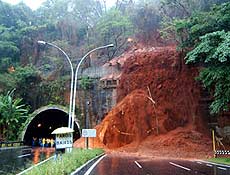
However, that rain happened last week. In the course of about 3 hours, parts of Rio saw 4 inches of rain. Streets were so flooded that the water came up to the bumpers (and over them) of cars in some parts of Rio. The three-lane road I live on became a one-lane road, as cars could not safely drive in either the left nor right lanes due to the flooding. And, in the biggest mess, there was a giant landslide that blocked off the Rebouças Tunnel (a nearly mile-and-a-half long tunnel), which goes right under Corcovado (the mountain with Jesus on it), and is one of the major north-south arteries in Rio, closing the tunnel for over a week and resulting in the kind of traffic jams and packed subways I've never seen in my life (one day, traffic was backed up for at least 8 miles along multiple roads.

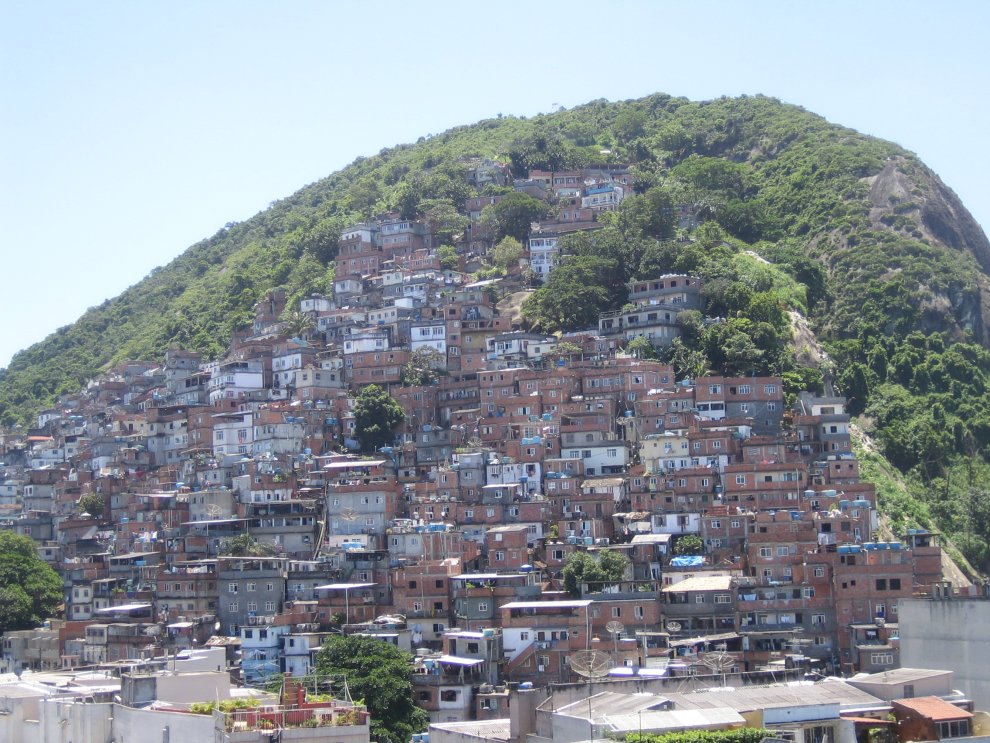
Rebouças has since reopened, but the problem of landslides continues. Not only did Rio's right-wing mayor, César Maia, apparently stop 64% of the land-containment projects that would stop such landslides. However, there has also been a consideration of how urban growth has factored into the risk of landslides here. As is known, Rio's favelas have spread out along the mountains of the cities, where the high-rises of the wealthier cannot be reasonably built. The problem is real enough that even O Globo (the largest media conglomerate of Brazil and the bastion of right-wing middle- and upper-class ideology) deigned to write about the favelas beyond the simple narrative of drug "wars". However, the approach is not surprising. The article frames the question simply - the growing number of favelas can, is, and will continue to affect the way the environment is impacted (though the point is in no way stressed in environmental terms) and will result in future landslides like the one that slowed the city down for 10 days.

Of course, this ignores the larger issue at hand: why the favelas are growing. It's no secret that the wage gap in Brazil is one of the worst in the world (regardless of how you're measuring, it falls in the top 3 worldwide, and often is number one). It's also no secret that, since the 1950s, the rural-urban exodus has been massive (going from 30-70% urban rural to 70-30%). With the wealth increasingly concentrated in the hands of the few, not just urban but rural as well, the rural poor have been forced to move to the urban centers to try to survive. However, the options in these urban centers (particularly Rio and São Paulo) are not great, based on existing classist and racist structures (while it's not universal, let's not forget that, in Brazil, oftentimes the poorer you are, the "browner" or even black you are). Thus, the poor, over the last 50 years, have increasingly become poorer, and have increasingly concentrated in urban centers.

(And, while it's tangential to my concerns here, let's not forget the impact this growth has environmentally. Not only do many of these favelas lack basic sanitary services. They build upon mountains, resulting in deforestation on the micro-level, which in turn not only can lead to more landslides but also damages the very delicate balance of the gradually-recovering Atlantic rainforest, which even exists here in Rio, where the Tijuca forest is the world's largest urban forest. Thus, these are not strictly economic and social problems; their environmental impact is longterm and damaging as well).

And yet this kind of consideration of the basic economic structures and inequalities in Brazil are not emphasized or investigated, in the media or by society at large. The growing favelas are not a symptom of the economic and social problems facing Brazil; they are a cause of transit problems in Rio. I know I've hit on this repeatedly, but it's worth emphasizing once again, and this article sheds light on yet another example of Brazil's refusal to ask questions and deeply consider the problems of poverty, race, and class here. But, as much as the media, the middle class, and the elites, here in Rio and elsewhere, may want to ignore it, the simple truth remains that, until society can try to reduce the wage gap and offer humane conditions to all of its citizens, these (relatively minor yet scandalous to the wealthy) transit problems will never go away.

Monday, February 12, 2007

Beaches in Brazil, Part Two

There's a nice little visual addendum at the article I linked to last week. It gives a nice visual sense of the way race and class can operate on the beach (though a few of the captions are mistaken - the gay community actually hangs out around Post 8, while the wealthy youth hang around Post 9, not vice versa). Anyhow, the slide show is on the left just after the article begins, and is a nice 1-minute diversion.

Wednesday, February 07, 2007

Bourgeois Bowling

Growing up in Ohio, bowling was a very popular activity among the working and middle-classes. From the time I was 5 until about 15, birthday parties were often held at bowling alleys, with bowling AND pizza to follow. It was practically nirvana for kids to be invited to a bowling/pizza party. Even afterwards, through my 20s, bowling was and and is a blast. Thus, I was very excited this past weekend when I had the opportunity to go bowling in Rio. However, I should have known what I was getting into.

For those who have never been bowling (what is wrong with you people?), they are usually extremely…“functional” places. You go. You bowl. Period. No super-nice decorations. No “classy” environment. Some alleys are a bit better than others (particularly in Akron, which is apparently the bowling capital of the world and hosts a few professional bowling events every year); however, the difference between one bowling alley and another are never as different as, say, upstate New York vs. rural Mississippi. Bowling tends to be a working- to mid-middle class event in the states, and the alleys match their clientele.

Not in Rio. I should have known what I was getting into, given that the bowling alley was Barra de Tijuca, one of the (if not the) wealthiest parts of the city. However, this was unlike any bowling I’ve ever seen. The only way to describe it is absolute bougie-bowling.

To begin with, they charged by the hour, and oh, did they charge. It cost 56 reais (roughly 25 bucks) for four people to bowl for ONE hour (roughly two games), and that didn’t include shoes (again, for those who never go bowling, you can usually pay about 15 bucks for four people to bowl for 3 games in the states). Additionally, this was the fanciest bowling alley I’ve ever seen. It was painfully clean (to the point of glaringly white walls), there was no stale smoke smell, there were no stains on the carpet, none of those little machines where you try to grab an ugly stuffed animal with the claw, none of this. There was an honest-to-god liquor bar that served vodka, Johnnie Walker whisky, and other fancy, expensive drinks (no choice between only Miller or Miller Lite here).

As for the clientele, it was CLEARLY wealthy (upper-middle class to upper class), and they dressed like it (this is the first time I have ever seen pumps and jewelry at a bowling alley) and, not surprisingly, as white as the pure driven snow. In contrast, the wait staff (yes, there was wait staff) was noticably brown, were dressed like waiters, and did EVERYTHING for you (whether you wanted them to or not). Thus, they came to your lane and put your names in the computer before you could start, and kept coming by to see if you wanted any drinks, food, etc. This sat rather poorly for me – where I come from, if you don’t know how to operate the computer, you have no right to bowl.

It ended up being enjoyable, save for the obnoxious kid in the lane over who would dance his way into our lane WHILE WE WERE BOWLING, which is one of the greatest sins there is at the bowling alley and which actually affected my score twice (the little bastard was lucky – Walter would have pulled out his piece and shot the kid on the spot). However, as we paid the 78 reais (35 bucks – some of our party got drinks), I remained somewhat amazed at the notion that bowling was a status symbol here. I just kept saying to myself…

“You’d never find the Dude here…”

Tuesday, February 06, 2007

Beaches, Racism, and Classism in Brazil

There's another tantalizing-but-ultimately-frustrating article at New York times on race and class in Rio today. The title "Drawing Lines Across the Sand, Between Classes" hits perfectly on the divisions within Rio, and there are some great examples. Rohter (not the greatest writer on the topic, and that's putting it nicely) does a pretty good job of beginning to delve into how the beaches in Rio are far from democratic, despite Roberto DaMatta's (who loves his stark dichotomies like none other) claims otherwise.

However, the article is also extremely frustrating because it does just that - he only begins to delve into the issue. Thus, we get tantalizing insights into classism (like the poor vendor who says the clients on the beach treat him like he doesn't even exist) and even racism (the wealthy Ipanema resident who complained about the "dark-skinned teenagers with that dyed blonde hair"). However, they are just quotations - Rohter never actually openly points out how indicative this is of the classism and racism that exist in Brazilian society, or that these quotes exist among a large portion of the population even while the citizens protest otherwise (more than once have I heard that America is racist while Brazil is not).

Additionally, there is very little contextualization. For example, while he quotes somebody who claims that "Ipanema is always in the vanguard, but Leblon has more of a family vibe", there's no mention of the fact that Leblon is even wealthier, and far more elitist and snobby (the Leblon woman's complaint about the risks a "defenseless sunbather" faces in such grave threats as the presence of dogs, paddleball, and surfers in the area perfectly hits on the elitism prevalent in Leblon as well, even if there are no surfers in Leblon, something the article itself mentions) than even Ipanema residents (which is saying something).

Even worse, Rohter only focuses on Ipanema and Leblon, which are in and of themselves two of the most elitist beaches (and, to be honest, not coincidentally two of the nicest) there are in Rio (he leaves out Barra de Tijuca). For example, there is no analysis or even inclusion of Copacabana and Flamengo. While these parts of the city are still middle class, there are far more poor people and minorities on these beaches, people who can't afford to go all the way to Ipanema from their homes in the North Zone (the poorer part) of the city. Thus, as somebody who's lived here for the last 5 months, and been here before, it seems rather obvious that Rohter himself never left the Leblon/Ipanema area to explore how the classism and racism spread beyond those two rather-elite beaches.

Despite these complaints, however, Rohter's article is well worth checking out, for it brings up some of the unspoken aspects of beach life in Rio that rarely make their way into the international image of Rio's beach culture.

UPDATE: The story was big enough that it actually made news in O Globo, Brazil's largest newspaper (there is no comparison in the U.S.). I initially saw it on the subway today, in the first section, on page sixteen, in an article titled "NYT overthrows the "myth" of beach-democracy". You can read the article in Portuguese here. Not surprisingly, O Globo goes into absolutely no depth or self-analysis of Brazil, instead just reporting segments of what Rohter wrote (and thus making Rohter's relatively superficial analysis look remarkably deep). It comes as no surprise that Globo doesn't actually ask questions about inequality in Brazil as it plays out on the beach (or anywhere else for that matter), and it is interesting that they put the myth of beach-democracy in quotation marks (perhaps distancing themselves from Rohter's suggestion that the beach isn't a democracy, thus implying Globo's stance that Brazil is egalitarian on the beach and elsewhere, a theme which pops up repeatedly). Finally, it is just interesting that Rohter's article is important enough that it has made national news here, perhaps due to its potential to make Brazilians react against his article or (nod their heads in agreement). Time will tell what (if any) reaction happens here...