Showing posts with label social inequality. Show all posts

Friday, April 09, 2010

The Social Effects of the Rains in Rio

By now, you may have heard of the devastation in Rio de Janeiro and Niteroi (across the bay from Rio de Janeiro). On Tuesday,the city received 288 millimeters (11.3 inches) of rain in a 24-hour period. Stop and think about that - nearly a foot of rain in 24 hours. The results were devastating. Well over 100 were dead before Wednesday, and that was before more mudslides in the mountainous areas buried hundreds more alive, leaving Niteroi to declare a state of emergency while Rio declared three days of mourning and dealt with destruction in the storm's wake as well. Overall, news sites and blogs alike have done a good job covering the story, and I have little to add to them in terms of the basic facts of the immediate story.

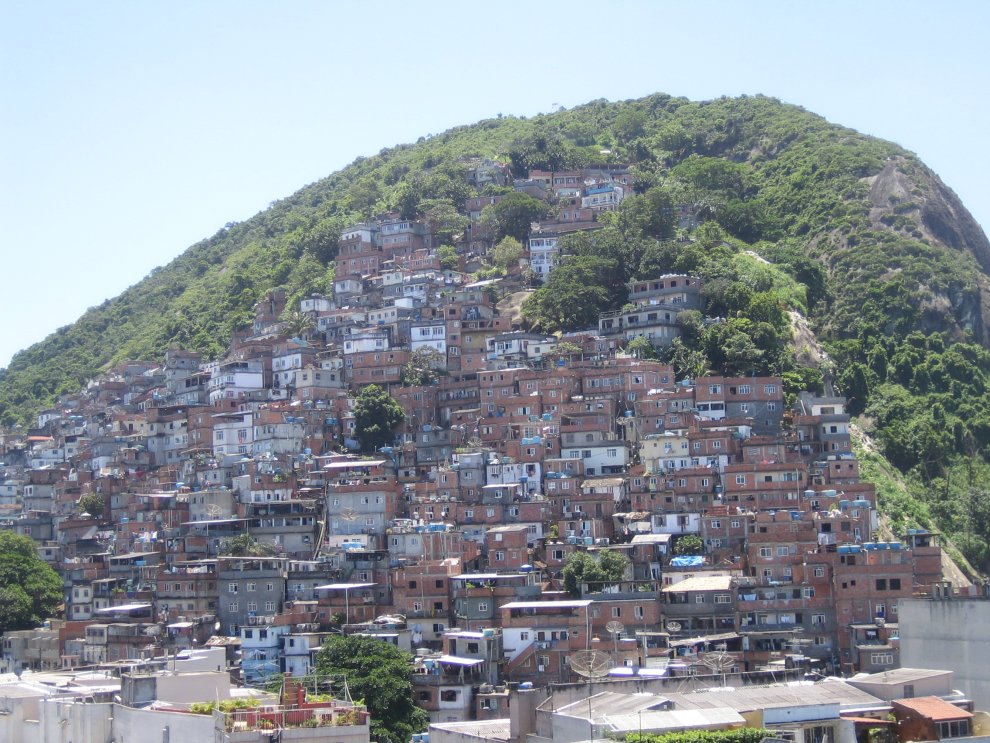
However, the deaths point directly to the social inequalities of Brazil and remind us once again how class, race, and environment are inherently tied together in this type of disaster. In Rio, the poor and marginalized were most directly impacted. This is because of the simple arrangement of urban space in Rio de Janeiro. And this isn't a recent project - state-led efforts to displace the poor from the best land in the city date back to the late-1800s. While the government has tried to improve infrastructure in the favelas (notably during Leonel Brizola's terms as governor from 1983-1987 and 1991-1994), that hasn't prevented the elites over the 20th century from buying up and developing the best land, flat and near the beach, within the city, forcing the poor to the outskirts of the city or to build the favelas along the side of the region's mountains. And when rains like this happen, what would have been a landslide that perhaps affected few suddenly turns into a catastrophe that leaves hundreds dead.

And it's really hard to blame the favelados for this. Certainly, where they build had and has very real environmental consequences, but to place the blame for this on their shoulders is to ignore the broader socio-economic realities and history of Rio for well over 100 years. Due to the enormous gap in wealth (which only increased in Brazil in the last 30 years of the 20th century), as well as increasing urbanization throughout the 20th century (the country went from 70% rural/30% urban in the early-20th century to 70% urban/30% rural by the 1980s, even as the population grew), Rio's poor have constantly found them forced to live and get by in the geographically and environmentally worst places available (the landslide in Niteroi that buried 200 was built on top of an old landfill, not exactly prime real-estate). Indeed, it's quite common to see luxurious apartment buildings in places like Sao Conrado, Tijuca, Ipanema, Botafogo, and elsewhere within direct eyeshot of a favela, making the tragedy only that much more painful for the poor. Those with the least in Rio were stripped of everything they had, within eyesight of apartment buildings housing Rio's middle- and upper-classes, resting safely on flat, solid ground.

Certainly, the rains in Rio and the loss of life are horrible and sad, no matter how you cut it. But this isn't an isolated incident, or a once-in-a-lifetime kind of disaster; it's a direct result of issues revolving around poverty and urban space. Virtually none of the dead from these rains are middle- or upper-class. They were safe in land and buildings that have been their province for generations, even while the poor were excluded, isolated, and forced to make do with the options available to them, which by and large happened to be mountainsides that could erode in heavy rainfall. Obviously, favelas do lead to environmental degradation that can result in loss of hundreds of lives; at same time, city has adopted policies since late-1800s that have forced poor to the "marginal" parts of Rio, either on outskirts and/or forcing poor to build fragile housing along moutains; thus, when there is plenty of rain, favelas suffer disproportionately while middle-class and upper-class housing is safe. And while certainly the nearly-foot of rain has led to a very high death count, these kinds of landslides are not infrequent on a smaller scale when Rio sees even moderate rainfall (which happens annually), affecting both people's lives and basic infrastructure in the city. And thanks to climate change, some climatologists predict Rio (and Brazil) can expect with much greater frequency the kind of rainfall they saw Tuesday, which will undoubtedly lead to the deaths of more of Rio's poor, all while the wealthy and well-off can look out their windows, click their tongues at the tragedy, and never think about the broader social processes that have led to such a loss of life.

Thursday, December 13, 2007

Brazil's CPMF Tax Goes Down

This morning, Brazil's Senate voted down the CPMF tax by a vote of 45 in favor of maintaining the tax, and 34 against keeping it (the tax would have needed a 2/3 majority, or 49 of the 79 senate votes). The CPMF (Contribuição Provisório a Movimentação ou Transmissão de Valores de Créditos e Direitos de Natureza Finança - Brazilian acronyms don't always totally match with their full names) was basically a tax waged on those who had bank accounts. Every time you paid bills online or did major withdrawals or deposits on your bank account, there was a .38% tax levied (originally the rate was .25%, but former president Fernando Henrique Cardoso gradually raised it to its current level of .38% in 2001). Because only the middle-middle to upper classes in Brazil have bank accounts (due to multiple economic and social factors), this tax really affected the wealthiest sectors of Brazil.

The failure means a couple of things. First, the opposition has celebrated this as a major victory, and it is a blow to Lula's administration (though nowhere near the "worst defeat Lula has ever suffered" and revealed a major popular refutation of his policies, which is what one member of the opposition declared. Losing a 2/3 majority by only 4 votes hardly constitutes a major refutation of his policies.) Additionally, as I mentioned in passing before, it really shows how despicably contrarian oppositional politics in Brazil are sometimes. The bill was defeated by the PSDB-Democrata right-wing political alliance, the same parties that voted for the bill's permanence in 1997 when Fernando Henrique Cardoso, of the PSDB, was president, and the tax continued to be passed during his administration. Yet the moment it came up for renewal (until 2011 in theory) under Lula, the opposition condemned the tax as one of the worst things to ever happen to "honest" (read: white and wealthy) Brazilians. Finally, there is the policy impact. The CPMF wasn't a useless tax - it played a major role in providing funds to social programs like Brazil's health care system and the Bolsa Familia, which helps families with less than the minimum income (which in Brazil is about $200/month). In seeking its renewal, Lula had pledged that all of the money would go to Brazil's health care (and most of it had already gone to health care). With this vote, the right-wing opposition, in what is in no way surprising yet still frustrating, basically said "to hell with the poor and disadvantaged in Brazil, and to hell with a funcitoning health care system".

This doesn't totally mean these programs will now disappear. Just because one form of taxation has disappeared doesn't mean others won't pop up, and already the Folha de São Paulo (incidentally, a much better example of good journalism without nearly the classism and Lula-hatred of O Globo) is already pointing out that other taxes can and will probably surface to replace the CPMF. However, the vote will also probably force Lula to reduce Brazil's budget surplus to continue to try to address the issues of social and economic inequality in Brazil.

Finally, in the area of a more personal gripe, there is the issue of the PSOL (Partido de Socialismo e Liberdade). The Party claims to be from the left and to want to fight for equality amongst all Brazilians. Its claims appear leftist on the surface, but it has been clear since the party's foundation earlier this decade that there are no pretenses to issues of social equality in every aspect, as it repeatedly and adamantly refuses to even consider basic women's rights such as abortion. The strongest claims they could make to seeking "equality" were generally on economic grounds (better distribution of wealth, combat rural poverty, improve minimum wage, etc.). However, even those claims are now in doubt. The one senator from PSOL, João Nery, voted against the tax, in effect saying that he was not interested in approving a tax that actually taxed the wealthier in an effort to help the Brazilian poor and try to reduce the numerous social and economic equalities in Brazil. I have ideologically had more problems withe PSOL than the PSDB for a couple of years - at least I knew the PSDB wasn't even going to pretend to try to really work on issues like social equality, preferring neoliberalism and openly favoring "private initiative" (and subsequently blaming the poor for their conditions) instead. But any mild shred of respect for PSOL I may have had has basically disappeared. While it is possible, I find it extremely unlikely that Nery was bucking party policy behind closed doors on this one (as it was only founded in 2003, PSOL is still very much the party of its leader, Heloísa Helena, a presidential candidate last year, and her followers). Once again, despite its protestations to represent the "uncorrupt" left, the PSOL did everything to try to help the PSDB-Democratas right-wing alliance, as it has done many times before. Nery's vote today just goes to show that the PSOL, despite its superficial appearance and insistence otherwise, is no less than a mockery and affront to all parties and people actually interested in social and economic justice.

Friday, November 02, 2007

Favelas, Landslides, Traffic: More Consequences of Brazil's Social Inequalities

Before I came to Brazil, my wife would comment on how hard it rained here and how flooded the streets would get, but I had started to believe she had exaggerated. It had rained here since I got here, and it had rained hard, but I'd never seen anything of the Biblical proportions that she would describe to me.

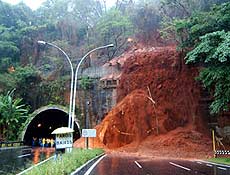
However, that rain happened last week. In the course of about 3 hours, parts of Rio saw 4 inches of rain. Streets were so flooded that the water came up to the bumpers (and over them) of cars in some parts of Rio. The three-lane road I live on became a one-lane road, as cars could not safely drive in either the left nor right lanes due to the flooding. And, in the biggest mess, there was a giant landslide that blocked off the Rebouças Tunnel (a nearly mile-and-a-half long tunnel), which goes right under Corcovado (the mountain with Jesus on it), and is one of the major north-south arteries in Rio, closing the tunnel for over a week and resulting in the kind of traffic jams and packed subways I've never seen in my life (one day, traffic was backed up for at least 8 miles along multiple roads.

Rebouças has since reopened, but the problem of landslides continues. Not only did Rio's right-wing mayor, César Maia, apparently stop 64% of the land-containment projects that would stop such landslides. However, there has also been a consideration of how urban growth has factored into the risk of landslides here. As is known, Rio's favelas have spread out along the mountains of the cities, where the high-rises of the wealthier cannot be reasonably built. The problem is real enough that even O Globo (the largest media conglomerate of Brazil and the bastion of right-wing middle- and upper-class ideology) deigned to write about the favelas beyond the simple narrative of drug "wars". However, the approach is not surprising. The article frames the question simply - the growing number of favelas can, is, and will continue to affect the way the environment is impacted (though the point is in no way stressed in environmental terms) and will result in future landslides like the one that slowed the city down for 10 days.

Of course, this ignores the larger issue at hand: why the favelas are growing. It's no secret that the wage gap in Brazil is one of the worst in the world (regardless of how you're measuring, it falls in the top 3 worldwide, and often is number one). It's also no secret that, since the 1950s, the rural-urban exodus has been massive (going from 30-70% urban rural to 70-30%). With the wealth increasingly concentrated in the hands of the few, not just urban but rural as well, the rural poor have been forced to move to the urban centers to try to survive. However, the options in these urban centers (particularly Rio and São Paulo) are not great, based on existing classist and racist structures (while it's not universal, let's not forget that, in Brazil, oftentimes the poorer you are, the "browner" or even black you are). Thus, the poor, over the last 50 years, have increasingly become poorer, and have increasingly concentrated in urban centers.

(And, while it's tangential to my concerns here, let's not forget the impact this growth has environmentally. Not only do many of these favelas lack basic sanitary services. They build upon mountains, resulting in deforestation on the micro-level, which in turn not only can lead to more landslides but also damages the very delicate balance of the gradually-recovering Atlantic rainforest, which even exists here in Rio, where the Tijuca forest is the world's largest urban forest. Thus, these are not strictly economic and social problems; their environmental impact is longterm and damaging as well).

And yet this kind of consideration of the basic economic structures and inequalities in Brazil are not emphasized or investigated, in the media or by society at large. The growing favelas are not a symptom of the economic and social problems facing Brazil; they are a cause of transit problems in Rio. I know I've hit on this repeatedly, but it's worth emphasizing once again, and this article sheds light on yet another example of Brazil's refusal to ask questions and deeply consider the problems of poverty, race, and class here. But, as much as the media, the middle class, and the elites, here in Rio and elsewhere, may want to ignore it, the simple truth remains that, until society can try to reduce the wage gap and offer humane conditions to all of its citizens, these (relatively minor yet scandalous to the wealthy) transit problems will never go away.