Showing posts with label weekend facial hair. Show all posts

Sunday, March 07, 2010

Facial Hair of the Weekend

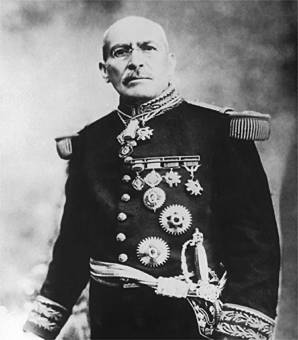
José Maria da Silva Paranhos Júnior, known as the Baron of Rio Branco, is perhaps Brazil's most famous diplomat (as well as its most famous mustache, one which could easily whip John Bolton's mustache in a fight). The son of the Viscount of Rio Branco, Paranhos was a monarchist who received his title (Barão do Rio Branco, by which he is most commony referred) just days before the end of the Brazilian empire in 1889. Although a monarchist himself, the Barão was the leading diplomat of the new Brazilian republic (1889-1930). In the early-1900s, issues of national territory were still fairly poorly defined in South America, as many countries simply did not have the institutional or financial ability (not to mention the population) required to establish a strong state-presence in its frontier regions. Serving as Minister of Foreign Affairs from 1902-1912 (when he died, leading to Carnaval coming to a halt, a rather remarkable event itself), the Barão settled all of the border disputes involving Brazil.

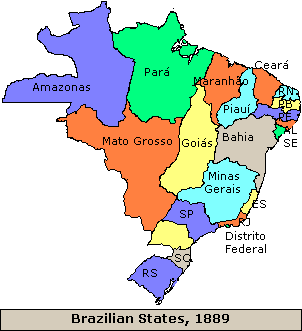
While this seems relatively unremarkable, it is worth keeping in mind that Brazil is larger than the United States without Alaska, and Brazil borders every country in South America except two (Chile and Ecuador). Thus, through the Barão's efforts, the territorial borders not just of Brazil, but of almost all of South America, were defined through the Barão's efforts. As part of these efforts, he signed a treaty with Bolivia in 1903 that gave Brazil the modern Amazonian state of Acre, which had been settled by Brazilians but which Bolivia had tried to lease to American rubber companies. He also obtained the northern state of Amapá in a dispute with France regarding the Guianas, The treaty finalized Brazil's modern boundaries, which remain to this day. Indeed, to understand the effect of Rio Branco's efforts, one only has to compare the map of Brazil in 1889, when the Republic was formed, and a 1990 map; all of those states were a part of Brazil (albeit often in territorial form) by the 1910s.

In addition to these feats, the Barão was involved in negotiating an end to disputes between the United States and various European countries, always believing in the power of diplomacy. Thus, for his role in defining borders and for setting a tradition of excellence in diplomacy that remains in Brazil to this day, the Barão Rio Branco is one of the most famous and respected Brazilian politicians ever.

(And I apologize for the light blogging and dearth of facial hair - dissertation deadlines and some other unfortunate events have really distracted me, but hopefully by next weekend, facial hair and other blogging will be a little more regular on my part. Thanks to Erik for picking up the slack for me).

Saturday, January 30, 2010

Facial Hair of the Weekend


This weekend, we'll be starting a series of Brazilian politicians with facial hair. Above is José Maria da Silva Paranhos (1819-1880), the Viscount of Rio Branco. Paranhos is more frequently referred to as the Visconde do Rio Branco, and is one of the earliest and most important diplomats in Brazilian history. He helped mediate boundary demarcations for Brazil in the mid-1800s, including defining the Uruguay-Brazil border, and many of his efforts finalized the boundaries of Brazil as they remain to this date, with some regional exceptions. He also organized the provisionary government that Brazil established in Paraguay in the wake of the devastating War of the Triple Alliance. Paranhos is also famous for playing a role in the slavery debate in Brazil. Brazil was the last country in the Western Hemisphere to abolish slavery (only in 1888). However, sentiment against slavery increased in the second half of the 1800s, and in 1871, Paranhos established the "free womb" law, which declared that any children born to slave women were automatically free. This was the first in a series of laws that led to the gradual and peaceful abolition of slavery (though complicated racial and social structures remained in place and are visible to this day). He played a major role in infrastructural development in Brazil, including developing railroads, creating taxes on imports in order to spur national development, overseeing the first telegraph line between Brazil and Europe, and launching Brazil's first national census in 1872. While perhaps not Brazil's most important diplomat and politician, he was a major figure in establishing the rich diplomatic history that Brazil has embodied from the 1830s to the 2010s.

Sunday, January 24, 2010

Facial Hair of the Weekend


This marks the last of the "Mexican Revolution Facial Hair" series (see here for others). Álvaro Obregón (1880-1928) was one of the leading generals in Venustiano Carranzo's Constitutionalist army. Obregón achieved many of the major military victories of Carranza's forces in the 1914-1915 period, and was rewarded with the position of Minister of War in 1915. However, by 1917, Obregón began to forge his own identity as a politician independent of Carranza, with the intent of running for president of Mexico in 1920. Obregón's campaign was successful, and he served as president of Mexico from 1920-1924. Many consider Obregón's administration to be the first of the "post-revolutionary" administrations, with conflict from the Revolution ending in 1920 (though, agian, the timeline and periodization of this varies from scholar to scholar). During his administration, Obregón launched major educational reform, land reform, and some labor laws (though the way such reforms and laws played out from state to state varied). Stepping aside for his hand-picked successor, Plutarco Elias Calles (whose mustache was already much less significant than Obregón's was), Obregón remained active in military and political life. In 1928, he decided to run for election once again, and won. Unfortunately for him, he was assassinated before being able to take office, marking simultaneously the last of the major political assassinations of the Mexican Revolution and the end of the major figures of the Mexican revolution serving as political leaders. The Partido Revolucionario Institucional (PRI) would command the presidency of Mexico for the next 72 years, continuing to get further and further away from its "revolutionary" ideals, until Mexico had determined it had enough of the PRI, electing opposition candidate Vicente Fox in 2000.

Sunday, January 10, 2010

Facial Hair of the Weekend

Emiliano Zapata (1879-1919). Although Zapata was from a moderately well-off family (in comparison to the peasantry) in the state of Morelos, he was still outraged by the gross inequalities between the landholding class and the landless peasantry, which constituted an overwhelming majority of the population in southern Mexico. Even before the Mexican Revolution, Zapata had begun fighting for greater rights and access to land for the peasantry. When the Revolution broke out in 1910, Zapata quickly became the leader of the Liberation Army of the South. When it became clear that Francisco Madero would not (or could not) effect the kinds of changes Zapata sought, Zapata soured on his leadership. Still, by 1914, Zapata was allied with Venustiano Carranza's Constitutional forces (including Pancho Villa), which were trying to overthrow Victoriano Huerta. By the end of 1914, Zapata's skills as a general were respected, but he was continuously dissatisfied with the slow level of reforms, and continued to take over cities and villages in the South, in an effort to strip elites of some of their power. When Carranza's government told Zapata to stand down, his response was effectively that if armed struggle wasn't going to bring reform, then certainly pacified, unarmed struggle would achieve nothing. Zapata's forces continued to cause trouble for Carranza in southern Mexico, but as Zapata was concerned with land reform in the south, his movement didn't ever really become a national one. In 1919, Zapata was ambushed and assassinated, dying a hero to many in the South, and although his message hasn't always persisted, his image as a hero of the people has continued to the present day in Mexico and beyond, most notably in the Ejército Zapatista de Liberación Nacional (EZLN) in Chiapas and surrounding areas.

Sunday, December 20, 2009

Facial Hair of the Weekend

Fransico "Pancho" Villa (1878-1923), general/caudillo in the Mexican Revolution. Villa was a part of Carranza's constitutional forces against Victoriano Huerta. Villa and Carranza had a falling-out over orders Carranza gave that prevented Villa from arriving in Mexico City before Carranza. In 1916, Villa raided Columbus, NM, leading to General John Pershing's useless "expedition" into Mexico to capture Mexico (which in turn elevated Villa's status as a popular hero). Villa finished out the revolution fairly quietly (for him), with minor mobilizations limited to Chihuahua. Upon the Revolution's so-called "end" in 1920, he lived on a ranch in Chihuahua, where he was assassinated while in his car in 1923 (and for those who aren't faint of heart, you can see video footage of the site, automobile, and Villa's bullet-riddled body here).

Sunday, December 13, 2009

Facial Hair of the Weekend

Venustiano Carranza (1859-1920). Carranza became political leader of Mexico in 1914 upon the overthrow of Victoriano Huerta. Carranza marked a return of revolutionary leadership (and amazing facial hair) to the presidency, but was unable to satisfy the forces of Emiliano Zapata to the South, Francisco "Pancho" Villa to the north, and increasingly later in his term, his own generals, whom he did not want running for president in 1920. While Carranza did push through major reforms during his time in office, his term was also marked by corruption. Carranza was assassinated by one of his former general's supporters in 1920 as he tried to flee Mexico City.

Saturday, December 05, 2009

Facial Hair of the Weekend

Victoriano Huerta, who (as Grigori noted) plotted with U.S. ambassador Henry Lane Wilson to overthrow Francisco Madero in 1913. Huerta quickly set up a quasi-military dictatorship upon assuming the presidency after Madero's murder. Newly-elected president Woodrow Wilson demanded Huerta step aside and let Mexico return to democracy, and recalled Wilson. When Huerta refused, Wilson began to support Venustiano Carranza's Constitutional Army (which included Álvaro Obregón, Francisco "Pancho" Villa, and Emiliano Zapata. Wilson's opposition and a series of military defeats led to Huerta's resignation in 1914. He went into exile, ending up in the United States, where he continued to plot a coup in Mexico, leading to the U.S. putting him under house arrest, where he remained until 1916, when he died from cirrhosis, leaving one to wonder just how much of an alcoholic Huerta had been as president.

(For other Mexican political leaders, see here)

Sunday, November 29, 2009

Facial Hair of the Weekend

Continuing the "Mexican politicians" theme, Francisco Madero (1873-1913), the man commonly viewed as the leader of the early phases of the Mexican Revolution, helping to overthrow Porfirio Diaz and establish a new government. Madero's administration was plagued by ineffectiveness and conflicting interests, as he was too moderate for radical revolutionaries, and too radical for the moderates. He probably would not have been remembered as fondly as he was/is if an assassain's bullet hadn't turned him into a martyr for the cause in 1913.

Friday, November 20, 2009

Facial Hair of the Weekend

Continuing the theme of Mexico's political leaders, the moustache (and medals) of Porfirio Diaz, president/dictator of Mexico from 1876 to 1910, when the Mexican Revolution began.

Friday, November 13, 2009

Facial Hair of the Weekend

This is the first in a series of Mexican political leaders from the 19th and early-20th century and their facial hair. This weekend: Emperor Maximilian I, the Austrian emperor of the short-lived Second Mexican Empire (1864-1867), and his awesome sideburns/beard combo.

Friday, November 06, 2009

Facial Hair of the Weekend

Karl Marx in his younger years, when his beard was more orderly. But hey, when writing Das Kapital, who has time to comb and trim one's beard?

Saturday, October 31, 2009

Facial Hair of the Weekend

Der Bart (the Beard) of philosopher Karl Marx, who no doubt believed in the dialectical nature of facial hair.

Friday, October 23, 2009

Facial Hair of the Weekend

Casey Blake may still have the best beard in baseball, but as the Philadelphia Phillies return to the World Series, I give you Phillie pitcher Chan Ho Park and his beard.

Saturday, October 17, 2009

Facial Hair of the Weekend

In the midst of the playoffs, some baseball facial hair seems appropriate. Former Cleveland Indian great Casey Blake, now of the LA Dodgers, with what is hands down the best beard in baseball.

Saturday, October 10, 2009

Facial Hair of the Weekend

To make up for my gaffe last week, the other South American leader with a full beard (though nowhere near as full or good as Lula's): Fernando Lugo, President of Paraguay.

Friday, October 02, 2009

Facial Hair of the Weekend

In honor of Rio de Janeiro getting the 2016 Olympics, capping a remarkable two-term presidency for the man, I give you Luis Inacio "Lula" da Silva, president of Brazil (and, to my knowledge, the only head of a non-Islamic state with a beard).

Saturday, September 26, 2009

Facial Hair of the Weekend

Once again, Civil War facial hair, this time with Union general and American hero Ulysses S. Grant.

Friday, September 18, 2009

Facial Hair of the Weekend

Continuing the theme of Civil War generals with facial hair, American patriot William Tecumseh Sherman. Too bad today's military code insists on the clean-shaven leadership.

Friday, September 11, 2009

Facial Hair of the Weekend

Civil War general Ambrose Burnside, in his later years.