Showing posts with label Brazilian politics. Show all posts

Tuesday, August 03, 2010

Why I Am Skeptical of Some Brazilian Poll Numbers

This episode from 1998 demonstrates perfectly a couple of things: the unreliability and partisanship of some of the major polling institutions in Brazil; many media organizations' (and not just Datafolha's) ties to the PSDB; and their efforts to either swing Brazilian voters to the PSDB and its allies, or to persuade those who would vote for another party to just abandon hope before the election. Additionally, as a sometimes-collateral effect, this type of activity also does a great job ratcheting up hatred for the PT among the more conservative elements of the middle-class; not only is it a "Workers' Party," but this type of misinformation (which was not an isolated incident in 1998, but continues today) lowers expectations for how the PT will do; when it does much better than predicted, the outrage increases, as people expect one outcome but receive another.

Though complex, this article gives a pretty strong and accurate portrayal of one of the "darker" sides of how Brazilian electoral politics and the media's role in them function, not just at the state level but at the national level as well, and it reminds me why I have a hard time taking any non-IBOPE polling results seriously (and though IBOPE has erred before, it has also done the best job of showing complete non-partisanship and a commitment to just reporting numbers).
(And again, sorry for the choppy translation, but at least Google Chrome makes it possible to actually link to Portuguese articles for non-Portuguese readers now, too).

Sunday, March 07, 2010

Facial Hair of the Weekend

José Maria da Silva Paranhos Júnior, known as the Baron of Rio Branco, is perhaps Brazil's most famous diplomat (as well as its most famous mustache, one which could easily whip John Bolton's mustache in a fight). The son of the Viscount of Rio Branco, Paranhos was a monarchist who received his title (Barão do Rio Branco, by which he is most commony referred) just days before the end of the Brazilian empire in 1889. Although a monarchist himself, the Barão was the leading diplomat of the new Brazilian republic (1889-1930). In the early-1900s, issues of national territory were still fairly poorly defined in South America, as many countries simply did not have the institutional or financial ability (not to mention the population) required to establish a strong state-presence in its frontier regions. Serving as Minister of Foreign Affairs from 1902-1912 (when he died, leading to Carnaval coming to a halt, a rather remarkable event itself), the Barão settled all of the border disputes involving Brazil.

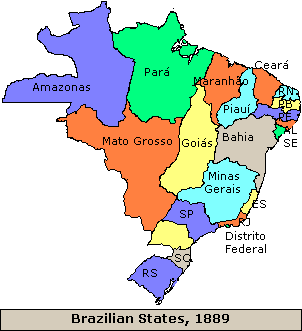
While this seems relatively unremarkable, it is worth keeping in mind that Brazil is larger than the United States without Alaska, and Brazil borders every country in South America except two (Chile and Ecuador). Thus, through the Barão's efforts, the territorial borders not just of Brazil, but of almost all of South America, were defined through the Barão's efforts. As part of these efforts, he signed a treaty with Bolivia in 1903 that gave Brazil the modern Amazonian state of Acre, which had been settled by Brazilians but which Bolivia had tried to lease to American rubber companies. He also obtained the northern state of Amapá in a dispute with France regarding the Guianas, The treaty finalized Brazil's modern boundaries, which remain to this day. Indeed, to understand the effect of Rio Branco's efforts, one only has to compare the map of Brazil in 1889, when the Republic was formed, and a 1990 map; all of those states were a part of Brazil (albeit often in territorial form) by the 1910s.

In addition to these feats, the Barão was involved in negotiating an end to disputes between the United States and various European countries, always believing in the power of diplomacy. Thus, for his role in defining borders and for setting a tradition of excellence in diplomacy that remains in Brazil to this day, the Barão Rio Branco is one of the most famous and respected Brazilian politicians ever.

(And I apologize for the light blogging and dearth of facial hair - dissertation deadlines and some other unfortunate events have really distracted me, but hopefully by next weekend, facial hair and other blogging will be a little more regular on my part. Thanks to Erik for picking up the slack for me).

Sunday, February 21, 2010

Brazil's 2010 Presidential Campaigns Officially Kicking Off with Dilma Rousseff's Nomination

Brazil's presidential election season has officially kicked off, as the Workers' Party (PT) officially nominated Dilma Rousseff for president yesterday. Of course, this is in no way any surprise - the candidates for all of the parties have been unofficially known for months. Still, with the original launch, Brazil is finally gearing up for its presidential campaigns now, with elections coming at the beginning of October.

There are several observations to be made already. First, it's of little surprise that the media, both in Brazil and internationally, is making a strong effort to undermine the Rousseff campaign; indeed, the negative portrayals in the press began as early as early as last April, when O Folha de Sao Paulo wrecklessly and baselessly linked Rousseff to political kidnappings in the late-1960s, when the military dictatorship was entering its most repressive phase.

Although Rousseff's campaign only officially began yesterday, the international media has already been gearing up its anti-Rousseff campaign, though, and much of it has hinged and will hinge on Rousseff, who was one of Lula's top aides, being portrayed as a "puppet" to Lula. This narrative actually began last year in the New York Times, when Alexei Barrionuevo offered absolutely baseless speculation (that his own article contradicted) that Lula would run for a third term, and that Rousseff was just window-dressing. Mercopress has also gotten into the act, suggesting that all of Lula's "prestige" rests on Rousseff. This is absurd for a couple of reasons; first, whether you love or hate Lula's administration, his policies have spoken for themselves in either direction; it's not like their effects will suddenly become retroactively great or terrible if Rousseff were to win. Additionally, by linking Lula's "legacy" to Rousseff, the press is clearly implying yet again that Rousseff is nothing more than Lula redux, and thus, a puppet.

Then, there are more subtle approaches. For example, even though this news agency has a photo of Rousseff on file (in this story), there is no picture of Rousseff just one day later in the story about her nomination. By literally "de-facing" her, they're effectively dis-associating her from the smiling, seemingly-likeable politician she appears to be, and while there is much more to politicians than their looks, if the appearance was completely useless, then politicians and campaign managers wouldn't need to or want to rely on the value of images in their own commercials and ads.

Meanwhile, stories about the possibility of Rousseff being Brazil's first woman president, while available, are not as common. After all, these stories do cast her in a positive light in the international arena, even though Lula is probably correct when he points out that being a woman in Brazil may mean she faces particular political challenges and prejudices that Serra will not. Certainly, Rousseff is not Brazil's first woman candidate, but this does mark the first time that one of the major parties (PSDB, PT, PMDB) has run a woman as its candidate. And speaking of the PMDB, it has thrown its support behind Rousseff, once again not running its own candidate for a variety of reasons (including the fact that, as Brazil's biggest and oldest political party, it also has a rather large "tent" that makes internal agreements difficult sometimes).

Likewise, the major opposition party to the PT, Fernando Henrique Cardoso's PSDB, began trying to undermine Rousseff's chances as early as May last year, too, attempting (again, without much evidence) to connect her to corruption charges that never materialized. Not surprisingly, the PSDB is also trying to paint Rousseff as a "puppet," a story that some media outlets are pleased to repeat simply by giving Cardoso an audience, in an effort to undermine her popularity. I'm not quite sure how this is supposed to work; the PSDB ran a fairly uncharismatic Jose Serra in 2002, an extremely unlikeable Geraldo Alckmin in 2006, and now is back to Serra this year, so obviously, they're trying to paint the PT candidate in a worse light to make up for possible shortcomings. But Lula has consistently been one of the most popular presidents ever in Brazil over his two administrations, so I'm not really sure why linking somebody to a president that has had upwards of 70% approval ratings seems like a good strategy. Certainly, anti-Lula rhetoric appeals to upper-middle class and elite prejudices in places like Rio, but you don't win elections just because the Zona Sul thinks you're right; the 2002 and the 2006 elections proved that, and I don't understand why the PSDB is trying that strategy again (unless it speaks to the complete absence of any new ideas or policies of their own that would appeal to people).

The opposition is also trying to undermine her on more basic policy issues. In her speech, Rousseff pointed to the successes in Brazilian development under the PT; in response, the PSDB suggested that the improvements did not happen because of Lula, but for "other reasons" (nevermind the fact that the PSDB has no problem taking all the credit for the economic boom of the late-1990s, before Cardoso's neo-liberal policies nearly brought the Brazilian economy crashing down again).

This is to say nothing of Rousseff's qualities or abilities. In Brazil, presidential candidates don't really start detailing their programs, agendas, and policies until they've been officially nominated, giving Brazil a 7-month electoral season. Certainly, the PSDB's (still-unofficial) candidate, Jose Serra, has been opining on Brazilian society and government in general, as has Rousseff, but there's a difference between general observations and specific plans. While Rousseff's platform became officially public last night, the PSDB hasn't yet launched its platform (aside from the "Lula is evil/Rousseff's a puppet!" approach). Thus, at this point, it's still not certain what the major differences between the two major candidates (not to mention tertiary candidates like Brazilian Socialist Party candidate Ciro Gomes, the PSOL's Heloisa Helena, and the Green Party's Marina Silva).

One thing is for certain - it will be a very interesting campaign to watch, and not just because Brazil is one of the world's biggest economies and increasingly important actors within the global economy and politics. Among other things, the PT and PSDB are battling for their futures - each party has successfully elected its founder (Fernando Henrique Cardoso for the PSDB, and Lula for the PT), but has not managed to elect somebody beyond its figurehead (although this does mark the first time that the PT is trying to elect somebody who isn't Lula). Because Brazilian parties are so new, they are often tied up to the personage of their founders, and it is not clear that they will be able to move beyond that image without suffering some major losses. (And as for the newness of the parties, the PMDB, Brazil's oldest party, has its roots in a dictatorship-era decree that limited Brazil to two parties, with the MDB being one, back in 1966; even for the first 10 years, political repression basically meant the MDB was useless, leading many to say that the MDB was the party of "yes" and the pro-dictatorship ARENA was the party of "yes sir!"). Additionally, the polls have gotten interesting - while there is still a long way to go, much was made of how far behind Rousseff had been; yet of late, she has jumped up at least 8% or more in various polls since last September. While Serra still has the lead, it's clear that it's far from being consolidated. That's why they hold the elections, after all. Still, there will be plenty more to come from the Brazilian campaign trail as the year goes on.

Saturday, January 30, 2010

Facial Hair of the Weekend


This weekend, we'll be starting a series of Brazilian politicians with facial hair. Above is José Maria da Silva Paranhos (1819-1880), the Viscount of Rio Branco. Paranhos is more frequently referred to as the Visconde do Rio Branco, and is one of the earliest and most important diplomats in Brazilian history. He helped mediate boundary demarcations for Brazil in the mid-1800s, including defining the Uruguay-Brazil border, and many of his efforts finalized the boundaries of Brazil as they remain to this date, with some regional exceptions. He also organized the provisionary government that Brazil established in Paraguay in the wake of the devastating War of the Triple Alliance. Paranhos is also famous for playing a role in the slavery debate in Brazil. Brazil was the last country in the Western Hemisphere to abolish slavery (only in 1888). However, sentiment against slavery increased in the second half of the 1800s, and in 1871, Paranhos established the "free womb" law, which declared that any children born to slave women were automatically free. This was the first in a series of laws that led to the gradual and peaceful abolition of slavery (though complicated racial and social structures remained in place and are visible to this day). He played a major role in infrastructural development in Brazil, including developing railroads, creating taxes on imports in order to spur national development, overseeing the first telegraph line between Brazil and Europe, and launching Brazil's first national census in 1872. While perhaps not Brazil's most important diplomat and politician, he was a major figure in establishing the rich diplomatic history that Brazil has embodied from the 1830s to the 2010s.

Monday, December 28, 2009

Novel Ideas in Politics

I know I've said it before, but at this stage of the game, I just don't really think polls on next year's presidential elections in Brazil are useful. There's still too much time between now and October 2010. And as this report on the latest poll numbers points out, the four candidates it has numbers for aren't even official. Why not? Because "so far none of the Brazilian political parties has formalized its presidential candidates." And it's not because primaries haven't occurred yet; there really aren't primaries in Brazil in the way they operate in the U.S. Imagine that - presidential campaigns that only begin in earnest in the year of the elections, rather than 16 months before the elections. What a novel idea....

Friday, November 13, 2009

Fernando Henrique Cardoso and Caetano Veloso - Angry, Bitter, Jealous Old Men

A couple of Brazil's more famous political and cultural leaders have decided to make complete asses out of themselves in the past few weeks. The ugliest, worst, most infuriating, and most hypocritical incident comes from Fernando Henrique Cardoso himself, writing about Lula. The not-too-subtle title of his editorial? "The Time Has Come to End Lula's Monarchy in Brazil." This is rich on so many levels, not least of which because Lula has only served two terms. Why was it possible for him to serve two terms? Because of a constitutional amendment passed in 1998....giving Fernando Henrique Cardoso permission to run for re-election (an amendment that was surrounded by controversy and not-unsubstancial accusations that Cardoso engaged in corrupt practices and promises in order to get Congress to pass his request for an amendment that would allow him to run for re-election).

From there, Cardoso's rhetoric just gets more hilarious. He accuses the Lula administration of offering little more than "odd government decisions, apparently meaningless presidential phrases and so much propaganda," which sounds really witty and completely out of touch with reality. Aside from getting the World Cup and the 2016 Olympics (which aren't exactly empty statements of "propaganda"), Brazil's economy has bloomed under Lula in ways that Cardoso only dreamed of as he used the blank check he received for the plan that stopped hyperinflation in 1994 in Brazil in order to ravage the country with his neoliberal policies and hollowed-out monetary policies that saw the real drop in value by half to the dollar immediately after his re-election.

As I said, the development and growth Brazil is now experiencing dwarfs even Cardoso's hopes, and to add insult to injury, Lula was able to achieve this growth by basically taking the opposite approach to the national economy that Cardoso did. Lula halted the privatizations that Cardoso pushed; he increased federal investment in state companies like Petrobras, with great results; where Cardoso tried to attract foreign businesses and offer tax relief to the upper class, Lula invested in programs like Fome Zero and the Bolsa Familia to help the country see real improvements in standards of living and consumption rates; and instead of relying on investment from European and American multinationals, as Cardoso did, Lula instead sought to diversify Brazil's global economic relations, bringing in deals with Africa, China, and India, even while continuing to establish deals with the U.S. and Europe when it was practical and beneficial to Brazil.

In short, Lula did everything Cardoso spurned, and under Lula's policies, and not Cardoso's, Brazil has finally seen the growth that many have expected for Brazil for decades. As a result, Cardoso's rant comes off as little more than the humorous, impotent rumblings of an angry bitter man whose policies have been rightly spurned, and, what's worse, proven to be ineffective in the face of a political rival's much greater successes.

If Cardoso has reached the point of a hollow shell of an angry old man, then Caetano Veloso has gone beyond the point of self-parody. Veloso is highly respected musically globally, even while he puts out pretty middling stuff. However, while Veloso may have once been pretty politically engaged in opposing Brazil's dictatorship, he jumped the ship of political progressivism years ago. Back in the 1990s, he declared that Brazil no longer had racism (something with which his former collaborator and friend Gilberto Gil strongly disagreed with, and in any debate on whether a country is racist or not, I'm going to tend to side with the guy who would experience racism).

With a tendency for ridiculous statements in the past, you'd think Veloso would know when to keep his mouth shut. But he doesn't. In proclaiming his support in Brazil's 2010 elections for Green Party candidate Marina Silva, Veloso declared that Lula is "illiterate," a president "who doesn’t know what to talk about and when he does he’s coarse." That's fine - if Veloso wants to hold to that belief, that's his right. But that notion of Lula as an incompetent speaker was pretty much passe by 2002, as years of political experience had helped Lula sharpen his rhetorical abilities. Is he an Abraham Lincoln or Cicero when he opens his mouth everytime? Of course not, but neither is Obama, nor was Cardoso, nor are most people (including Veloso, in spite of how highly he holds his own lyrical ability). In his comments, Veloso doesn't come off as angry as Cardoso. Still, positions and statements like these are risible at this point; Lula's proven time and again he's far from "illiterate," and even if you don't think his every word is poetry, one might hope you'd realize that presidents are supposed, first and foremost, to help lead and improve their countries, and in that arena, Lula has been a major success. Sure, there are shortcomings even in his administration (hello, environmental policy), but to hear Veloso and Cardoso tell it, you'd think Brazil was ruined by the cult of personality of an illiterate laborer. It would be offensive if it weren't so disconnected with the actual current situation in Brazil.

Instead, Veloso and Cardoso just show their true colors: as bitter old men out of touch with Brazilian politics and development.

Tuesday, June 23, 2009

Back from Brazil

As my flurry of posts last weekend probably indicated, I'm back from Brazil. Although I'd only been gone for 15 months, I was really surprised at the changes that had happened, in Brazil and abroad.

The change was evident immediately upon arriving at the airport. Thanks to the H1N1 scare ("influenza suina"), all the travelers on the plane (Brazilian and foreign) had to fill out a sheet saying whether they had had a cough and/or fever in the last 10 days in addition to the regular Customs paperwork. And just to be safe, the officials at the gate and at customs who gave us the papers and took them back all wore masks. I suppose precautions are OK, but it still seems a bit extreme of a response to a disease that a couple thousand people have gotten out of more than 6 billion in the world.

Also at the airport, it was very obvious that Rio is pushing very hard to get the 2016 Olympics. Rio's airport has two terminals; one is new, but one was built in the 1970s, and it shows, not so much in deterioration as in design and lighting. However, the (in my opinion, relatively ugly) walls were all covered with materials indicating that the aiprort is undergoing a major overhaul in its appearance, and there were signs all over showing how the aiport will look with the new walls and better lighting. If it looks half as good as the design looked, it will be a marked improvement. And just in case you weren't sure it was for the Olympics, there were signs all over with comments on getting ready for 2016, boasting of Brazil's ability to host, the changes their making to infrastructure, etc.

While we're on the subject of airports, Sao Paulo has demonstrated it may quite possibly have the stupidest airport security policy outside of the U.S. I have now flown into both airports in Sao Paulo from both airports in Rio, and every time you make a connecting flight, you get off the plane and immediately stand in line. For what. To go through security. Again. You of course go through when you're in Rio, and yet when you get in Sao Paulo, you have to do it all over again. I just don't understand this - it's not like Rio says, "meh, security, smecurity" - it's the same metal detector, the same "remove your laptop," the same time waiting in lines. And I just can't figure out the logic for this - it's not like Brazil has had to deal with a rich legacy of (often-deserved) mistrust from the rest of the world, and there isn't exactly a history of terrorist attacks on Brazil via airports. Even in the U.S., which is way too paranoid in terms of security, you don't have to go through security to make a connection. Maybe there's some logic in Sao Paulo, but I'll be damned if I can figure out what it is.

I will want to deal with the visible effects of Rio's new mayoral administration in another post, but in political news, the PSDB is already gearing up against the PT for the 2010 elections. The commercials I saw weren't actually going after Dilma Rousseff herself, nor after Lula; rather, they were simply critical of the PT in the vaguest of terms, basically trying to frame next year's elections as "PT vs. PSDB." I don't know yet if this is smart or foolish politics; on the one hand, getting people to think just in terms of parties could help the PSDB, but on the other, relying on vague condemnations and showing a lack of any good candidate or policy alternative could backfire. Suffice to say, the content of the commercials themselves was appalling, relying on innuendos, non-controversies, and other baseless vague accusations against the PT. While one can level charges of corruption against all parties in Brazil right now (and for generations back), including the PSDB, the PT is not exactly mired in any scandal - the biggest challenge is facing the centrist-PMDB, whose Jose Sarney (president of Brazil from 1985-1990 and current president of the Senate) is embroiled in an expenses scandal. The PSDB commercial tried to say that the PT was directly involved in that, but most Brazilians (at least, those outside of the middle-class Zona Sul in Rio) are smart enough to understand that Brazil is a parliamentary presidential system, and just because Lula and the PT have to collaborate with the PMDB (and many other parties) in the legislative branch, does not mean that Lula or the PT are giving orders to Sarney.

Finally, in cultural news, O Globo has come out with what is quite possibly the Worst Novela Ever. Called "Caminho das Indias" (Road from Indias - yes, it's pluralized, and no, I don't know why), it has some of the most ridiculous exoticism and historical/cultural innacuracies I've ever seen in any country. The basic plot immediately reveals the ridiculousness - an Indian woman who loved a member of the "untouchable" caste in India is now married to a wealthy businessman, and the "untouchable" has also become a successful businessman, and (of course) the two are competitors not just in the business world, but for the woman's attention as well. There are numerous other ridiculous aspects to the plot that are too convoluted to go into here. However, it should be fairly obvious the ridiculous premise that "love can conquer all," including the caste system. Equally risible is the notion of an "untouchable" becoming a major business leader. While I understand that the caste system is nowhere near as rigid as it once was, it certainly is nowhere near as lax as the Novela makes it out to be. And the good times keep coming. While the main female protagonist passes for an Indian, her character's name is absurd: Maya. Yes, a Brazilian actress playing an Indian named after a Mexican indigenous group. But at least she kind of looks the part, which is more than I can say for either of the two main male characters (the latter of whom played an Italian, with much more success, in his previous novela). And the theme song is the worst mish-mash of an "interpretation" of Indian music and culture ever (keep your eyes open for the Russian-like dancer at about 33 seconds in). I was horrified, but having never been to India, thought I was perhaps overreacting. However, last night I showed the clip to an Indian colleague of mine at work, and she was even more horrified and offended than I was. Well done, O Globo - well done indeed.