Showing posts with label Brazilian diplomacy. Show all posts

Wednesday, August 04, 2010

Today in Specious Arguments: Lula's Absence at the G20 Destroyed Brazil's Economic Power!

Although editorials like this are all too common and don't surprise, their absurdity never ceases to amaze me. I always marvel at how far some will stretch in order to attack Lula, even when all other evidence suggests their arguments are wrong. Are there good reasons to criticize Lula? Absolutely. It's completely fair to say that his environmental record is at best "not good." Although I wouldn't fully agree, you could also suggest that he did not go far enough with his social programs, and that he compromised too many of his ideals to become president.

But to go after Lula because he skipped June's G-20 to deal with domestic disaster is facile and ridiculous. First, there is the fact that there is very little concrete evidence to suggest that Lula's absence has doomed Brazil. The author provides a lot of conjecture, but no actual evidence of damage. Could Lula's absence possibly be a problem down the line? Theoretically, I suppose so; but the idea that missing deals that could have taken place at one meeting across two days in June will reduce Brazil's economy and political presence globally is not only ridiculous; it's insulting to the expert diplomats Brazil has throughout the world to suggest that their efforts are undone just because a president missed a meeting due to issues at home. And there is absolutely no reason, politically, economically, or historically, to believe that the window that was open for opportunity for economic deals on June 26-27 will magically be closed on October 22-23, when the G20 meets again. Arguing that Lula's absence has caused irreparable damage to Brazil's standing in the global economy and politics is not just specious; it's patently absurd.
And on those issues at home...it's not like Lula dodged the meeting to vacation, or get some fake honorary title or something. There were horrible floods in Brazil; dozens were killed, and thousands more displaced. And this was almost simultaneous with the G-20 meeting. It's not like Lula waited to respond until it was too late. What is more, I just don't buy the "he skipped the G-20 for a few more votes at home argument," for several reasons. First, being president isn't the same as being head of the national bank; Lula has other duties besides economic deal-making. Taking care of his constituents is arguably at the top of the list of presidential duties. Surveying the damage and trying to help alleviate Brazilians' suffering through executive decision-making is probably more important than economic deals that can come later. I imagine most presidents or prime ministers would agree that domestic disasters take precedence over international meetings; you are elected by and serve your country's civilians, not the leaders and deal-makers of other countries.
Finally, this idea that Lula skipped the meetings for "a few more votes at home" is absurd. A) He's not running for re-election. Sure, you could suggest he did it to garner support for the PT's candidate, Dilma Rousseff; certainly, he's been very present in drumming up support for her. But the flooding happened in Brazil's Northeast, an area where Lula got 66% of the vote in 2006 (nearly propelling him to a first-round victory), an area where the PT has traditionally done very well. It's not like this was some opportunity to try to shore up support where Lula and the PT had traditionally lacked it, and to suggest as much is to effectively ignore both regional politics and the social conditions in the Northeast.
In short, this is one of the worst types of editorializing, relying not only on doom-and-gloom predictions based on hypotheses with no grounding in historical realities and gross simplifications of complex negotiations, but also turning to conjecture that ignores social realities and political practicality (who is the president supposed to serve?) in order to launch yet another smear campaign.

Sunday, March 07, 2010

Facial Hair of the Weekend

José Maria da Silva Paranhos Júnior, known as the Baron of Rio Branco, is perhaps Brazil's most famous diplomat (as well as its most famous mustache, one which could easily whip John Bolton's mustache in a fight). The son of the Viscount of Rio Branco, Paranhos was a monarchist who received his title (Barão do Rio Branco, by which he is most commony referred) just days before the end of the Brazilian empire in 1889. Although a monarchist himself, the Barão was the leading diplomat of the new Brazilian republic (1889-1930). In the early-1900s, issues of national territory were still fairly poorly defined in South America, as many countries simply did not have the institutional or financial ability (not to mention the population) required to establish a strong state-presence in its frontier regions. Serving as Minister of Foreign Affairs from 1902-1912 (when he died, leading to Carnaval coming to a halt, a rather remarkable event itself), the Barão settled all of the border disputes involving Brazil.

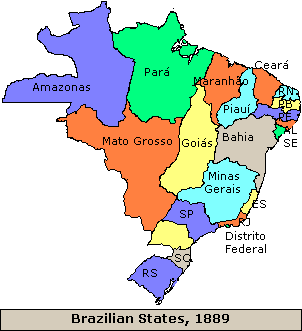
While this seems relatively unremarkable, it is worth keeping in mind that Brazil is larger than the United States without Alaska, and Brazil borders every country in South America except two (Chile and Ecuador). Thus, through the Barão's efforts, the territorial borders not just of Brazil, but of almost all of South America, were defined through the Barão's efforts. As part of these efforts, he signed a treaty with Bolivia in 1903 that gave Brazil the modern Amazonian state of Acre, which had been settled by Brazilians but which Bolivia had tried to lease to American rubber companies. He also obtained the northern state of Amapá in a dispute with France regarding the Guianas, The treaty finalized Brazil's modern boundaries, which remain to this day. Indeed, to understand the effect of Rio Branco's efforts, one only has to compare the map of Brazil in 1889, when the Republic was formed, and a 1990 map; all of those states were a part of Brazil (albeit often in territorial form) by the 1910s.

In addition to these feats, the Barão was involved in negotiating an end to disputes between the United States and various European countries, always believing in the power of diplomacy. Thus, for his role in defining borders and for setting a tradition of excellence in diplomacy that remains in Brazil to this day, the Barão Rio Branco is one of the most famous and respected Brazilian politicians ever.

(And I apologize for the light blogging and dearth of facial hair - dissertation deadlines and some other unfortunate events have really distracted me, but hopefully by next weekend, facial hair and other blogging will be a little more regular on my part. Thanks to Erik for picking up the slack for me).

Wednesday, February 17, 2010

Diplomatic Issues Facing Honduras's Porfirio Lobo Sosa

It would appear that Porfirio Lobo Sosa's administration is not going to get the smooth diplomatic treatment many in Honduras had hoped for. For starters, Brazil's foreign minister, Celso Amorim, said Brazil continues to not recognize the electoral process that brought Lobo Sosa to power, though in a linguistic trick, also claimed that Brazil recognized "states, not governments."

On the other hand, while the United States has moved to recognized Honduras in the wake of elections, it has made it clear that recognition will not be a carte blanche for Lobo Sosa:

The US State Department has rejected Porfirio Lobo Sosa's nomination of Roberto Flores Bermúdez to be the Honduran Ambassador to the United States. Flores Bermúdez was appointed Ambassador to the United States by Manuel Zelaya Rosales, but shortly after the coup on June 28, 2009, switched allegiance to the de facto regime in Honduras.
As RNS points out, it is quite possible that
Lobo Sosa was likely testing the waters to see how much he needed to distance himself from the de facto regime, which he has never denounced. No one who was directly involved in the de facto regime has had their US visa restored. The State Department's rejection of Lobo Sosa's choice as Ambassador means that the United States, like Spain, so far, is rejecting the participation in diplomacy of anyone directly linked to the de facto regime.
I think this makes sense, and I think it speaks better of the Obama administration's approach than many have allowed. I agree that perhaps it could have done more to condemn the coup, but I (semi-paradoxically) also have few objections to the U.S. not directly intervening in Latin America. Presuming the U.S. continues to remain inflexible in refusing members of the de facto Micheletti government to have visas or participate in international politics with regards to the U.S., then I think this is a worthwhile message to send, and offers at least some measure of punishment to those politicians and business leaders who hoped to get well off of the coup.

Saturday, January 30, 2010

Facial Hair of the Weekend


This weekend, we'll be starting a series of Brazilian politicians with facial hair. Above is José Maria da Silva Paranhos (1819-1880), the Viscount of Rio Branco. Paranhos is more frequently referred to as the Visconde do Rio Branco, and is one of the earliest and most important diplomats in Brazilian history. He helped mediate boundary demarcations for Brazil in the mid-1800s, including defining the Uruguay-Brazil border, and many of his efforts finalized the boundaries of Brazil as they remain to this date, with some regional exceptions. He also organized the provisionary government that Brazil established in Paraguay in the wake of the devastating War of the Triple Alliance. Paranhos is also famous for playing a role in the slavery debate in Brazil. Brazil was the last country in the Western Hemisphere to abolish slavery (only in 1888). However, sentiment against slavery increased in the second half of the 1800s, and in 1871, Paranhos established the "free womb" law, which declared that any children born to slave women were automatically free. This was the first in a series of laws that led to the gradual and peaceful abolition of slavery (though complicated racial and social structures remained in place and are visible to this day). He played a major role in infrastructural development in Brazil, including developing railroads, creating taxes on imports in order to spur national development, overseeing the first telegraph line between Brazil and Europe, and launching Brazil's first national census in 1872. While perhaps not Brazil's most important diplomat and politician, he was a major figure in establishing the rich diplomatic history that Brazil has embodied from the 1830s to the 2010s.

Friday, November 27, 2009

Obama, Lula, and Iran: Understanding the Complexities of International Relations

One of the refrains I've heard from some in Latin American and in the U.S. is that Obama is no different than Bush in terms of policies. These claims are clearly laughable at face value, and every value beyond that. Still, some still make those claims, based mostly on a "reasoning" that (and I paraphrase) "Obama hasn't stopped the wars, and Obama's a leader of an empire, just like Bush was." Again, stupid and simplistic arguments, but they exist.

In the face of such baseless and unrealistic accusations, this week offered yet another reminder of just how different the two administrations are:

President Obama sent a letter on Sunday to President Luiz Inácio Lula da Silva of Brazil reiterating the American position on Iran’s nuclear program, a day before Iran’s president made his first state visit to Brazil, an aide to Mr. da Silva said Tuesday.

Mr. Obama did not explicitly criticize Mr. da Silva for hosting President Mahmoud Ahmadinejad of Iran, implying instead that he hoped Mr. da Silva would use the occasion to express support for the international effort to forge a compromise on Iran’s nuclear ambitions, according to two American officials.

In the three-page letter, Mr. Obama restated his support for a proposal by the International Atomic Energy Agency that would try to steer Iran into developing nuclear energy for peaceful, civilian purposes. The proposed accord calls for Iran to export most of its enriched uranium for additional processing into a form that could be used in a medical reactor in Tehran.

The differences between Bush and Obama should be fairly clear here. In Bush's black-and-white, with-me-or-against-me vision of foreign relations, I just don't see how he would have been nearly as nuanced in his letter-writing (if he even bothered to write a letter). Instead, we probably would have gotten some tired mashup of the "axis of evil" rhetoric, with no efforts to use Ahmadinejad's trip to Brazil to try to emphasize the policy we felt should be taken (which, to be fair, called for war against Iran during the Bush years - not exactly a policy to push at any time).

Under Obama, we get a cordial letter that clearly shows a far more nuanced understsanding of how international politics work not just between the U.S. and other countries, but between other countries and other countries. It's a far more multi-lateral position that understands and acknowledges the importance of other countries in the global arena without ever "conceding" the U.S.'s own role. Indeed, I think it's safe to say that Obama's move, while it may not be effective, was rather brilliant: he found a way to try to get the U.S.'s message to Ahmadinejad without ever having to talk directly to the Iranian president. Whether Obama's letter came up in conversation between Lula and Ahmadinejad (and what the nature or tone of that conversation was) may never be known, but moves like this should obliterate any declaration that Obama and Bush are "the same thing."

And as for Ahmadinejad's trip to Brazil, while it has sparked controversy, it hasn't been on the level of Chavez's alliance to Iran. Earlier this month, Lula met independently with Palestinian president, Mahmoud Abbas and with Israel's president, Shimon Peres, in an effort to try to increase negotiations for peace in the middle east. Lula has made little secret of his goal to use Brazil's newfound diplomatic presence in the global community to try to work towards peace in the region, and has even gone so far as to recommend the Brazilian national soccer team play a friendly game against an Israeli-Palestinian team. From Lula's point of view, Ahmadinejad's visit is a part of that broader effort. While the U.S. media has grossly misrepresented the Iranian president's trip to Brazil, declaring the trip, as Time magazine did, to be in "defiance" of the U.S., Time's own report indicated otherwise, and revealed Lula's motivation for hosting Ahmadinejad:
Lula enjoys considerable respect internationally, and the incorrigible talker believes problems can be resolved through dialogue. Before Ahmadinejad arrived, Lula pointedly declared, "It is important that someone sits down with Iran, talks with Iran and tries to establish a balance so we can get back to a kind of normality in the Middle East."
Exactly. Treating Iran's trip to Brazil as some isolated incident totally misses the point. Lula isn't meeting with Iran to thumb his nose at the U.S., or to show his support for "terrorism," or any such matter. The Iranian visit is part of a month-long effort to accelerate peace efforts in the Middle East, and Lula is well aware that Iran would be central to any such efforts. And it's not like it was some sycophantic, "best friends forever!" trip:

Of course, Lula has plenty of differences with his guest from Iran. He has made it clear he supports a two-state solution to the Israeli-Palestinian conflict, has made a point of repudiating all acts of intolerance or terrorism, and has subtly criticized Ahmadinejad's denial of the Holocaust and of homosexuality in Iran.

Those are messages that Ahmadinejad needs to hear from friends, notes Anoush Ehteshami, a professor at the Centre for Iranian Studies at Durham University in England. Since Iran does not appear to be listening to the West, especially not the United States, on the issue, the emergence of interlocutors who could help bridge the gap between the two sides ought to be welcomed. "Hearing [these messages] from Lula will be a little bit better received than if it were coming from U.S. President or E.U. leaders," Ehteshami says.

Once again, that's exactly right. This latest trip is just another example of Lula's model of diplomacy throughout his career. Diplomacy depends on talking, on dialogue, and not on rejecting other leaders or countries simply because you disagree with them. And any effort towards peace, no matter who is leading it, is a valuable step. Sometimes, other countries may be in a better position for these kinds of talks than the U.S. is, and this is one of those instances. And anybody who insists Brazil is suddenly "palling around" with terrorists or directly contradicting the U.S. intentionally simply has no understanding of how diplomacy and foreign relations do and should work.

Tuesday, November 24, 2009

The Very Real Economic Effects of George LeMieux's Stupidity

Republican Senator George LeMieux's oh-so-brave, principled stand against Barack Obama's nominee for ambassador to Brazil, is having a negative effect on more than just our diplomatic relations:

Boeing Co. may lose a $7.5 billion jet fighter sale to Brazil unless the U.S. Senate lifts a four- month delay in confirming President Barack Obama’s nominee for ambassador to Latin America’s biggest country, a former top U.S. diplomat to the region said. [...]

“This will cost thousands of U.S. jobs,” said Aronson, who served as top envoy to the region from 1989 to 1993 for Presidents George H.W. Bush and Bill Clinton. “It’s an insult to Brazil to tell them they’re not important enough to have an ambassador like so-called advanced countries but that we want them to buy our planes over the French.”

Boeing is working to prevent Dassault from winning a contract that analysts estimate could be valued at as much as 5 billion euros ($7.5 billion). The Chicago-based company delivered its final offer for the F/A-18 Super Hornets in October, after French President Nicolas Sarkozy traveled to Brazil and won a promise from his counterpart, Luiz Inacio Lula da Silva, to open exclusive talks to buy Dassault’s Rafale jet.

That's right - because of LeMieux's pigheaded and completely unnecessary stubbornness, the U.S. may lose thousands of jobs when we desperately need some good news in the employment front. Not only that, we would lose those jobs to France, who just a few years back Republicans excoriated because France wouldn't support the Iraq war. Such moments as these often lead to hyperbole, but I'm not so certain that, at this point, calling LeMieux an economic traitor is too far off the mark.

Friday, November 20, 2009

Republicans Once Again Blocking Obama's Nominee for Ambassador to Brazil

A few weeks back, I wondered if the U.S. was about to finally get its ambassador for Brazil, as Jim DeMint had decided to stop his grandstanding and obstruction on one of the most increasingly important ambassador positions for the U.S. It seemed that things would finally get resolved.

Well, meet Senator George LeMieux, the new Jim Demint:

Shortly after Sen. Jim DeMint (R-SC) agreed to drop his opposition to President Barack Obama’s nominee for Ambassador to Brazil, interim Sen. George LeMieux (R-FL) decided to pick up where DeMint left off. DeMint had been blocking Thomas Shannon’s nomination over the Obama’s policy on the coup in Honduras; LeMieux, on the other hand, is accusing the former Bush nominee of being soft on Cuba. According to an anonymous Republican aide, LeMieux is delaying Shannon’s confirmation over the role he played in initiating talks with Cuba on migration and direct mail service when he was Assistant Secretary of State for Western Hemisphere Affairs under the Obama administration.
DeMint's excuses were absolutely risible, but LeMieux's complaints about Shannon make DeMint look like a seasoned veteran of international affairs. Obstruction because of an individual's role in talks over direct mail service to Cuba? Clearly, Shannon is a massive communist threat who cannot take office!!!!!

As Erik has repeatedly said, this is the kind of thing Democrats absolutely need to be broadcasting loud and clear to the American public in order to show how childish, ridiculous, stupid, and hypocritical Republican politicians have become. And while that kind of tactic won't appear with the older generation of Democratic politicians, we can still hope younger and up-and-coming Democrats adopt them.

Friday, November 06, 2009

U.S. to FINALLY Get Ambassador to Brazil?

I'd been wanting to blog about this for awhile. The ever-classy Jim DeMint, friend to coup-mongers, had been stalling Obama's appointment for the U.S. Ambassador to Brazil for months. DeMint claimed it was because of Obama's position in the Honduras crisis, which began on June 28. Still, as Brazil had (of yet) anything to do with Honduras, DeMint's position really just came off as a bunch of hollow and useless grandstanding. DeMint's position was indefensible, and it was absurd that the U.S. still did not have an ambassador to Brazil, one of the top ten largest economies in the world and an increasingly important global power in economic, political, and diplomatic issues. DeMint's attention-grabbing measures were stupid and damaging to developing relations with Brazil. I was all ready this weekend to go into great detail on the possible consequences of DeMint's actions.

However, it seems that post is not necessary, as apparently, Obama's policy towards Honduras has "shifted" enough that he now is willing to unblock Thomas Shannon's nomination to the post of ambassador to Brazil. DeMint claims he's had a change of heart because Obama's administration has now said it will recognize Honduras's elections this year whether Zelaya is in office or not, a shift from its previous stance. If that's what DeMint wants to use as his window dressing, then I guess that's fine, but I'm still not buying it, especially since Obama's administration only announced that it would not recognize the elections back in September, which again doesn't really serve as an explanation as to the need to block the nominee from July (when Shannon was nominated) to September. Still, I guess if Jim DeMint wants to wage his battles on useless battlefields that are uninteresting to most of the electorate, that's his prerogative. Still, part of me deeply hopes that the Obama administration gets Shannon to his position, and then reverses its stance and doesn't acknowledge the elections of Honduras as legitimate due to their occurring during an illegal administration. Though I guess that would give DeMint another opportunity to grandstand and feel important, so maybe it's better the administration deny him that opportunity, and let him continue to be the little man Jim DeMint truly is.

Sunday, November 01, 2009

An Addendum to Honduras: Brazil's Role

In my original post below, I wanted to include Brazil's role, but had neither a decent way of stating that role nor a good place to put it. Fortunately, Randy perfectly and concisely summarizes the importance Brazil has played in the Honduran crisis, in his "winners and losers in Honduras" post. Among the winners:

Lula. Brazil's president's vigorous leadership on the issue was a model for the region: unwavering, but not bombastic; providing support behind the scenes (e.g., the Brazilian embassy for Zelaya's refuge), while maintaining diplomatic pressure was a sign of true diplomatic skill, a trait common in Brazil, arguably Latin America's most skilled diplomats.
I couldn't put it better myself.

Monday, September 21, 2009

Did Brazil Play a Minor or a Major Role in the Return of Manuel Zelaya?

More news agencies are reporting on Manuel Zelaya's return to Honduras, and there will be many interesting developments over the next few days and perhaps weeks, accompanied by a decent amount of speculation as to what might happen next.

However, one aspect in all of this may go relatively ignored, with little comment on, but it's something I raised in these comments. Specifically, what, if any, role did Brazil play in this?

As we all know, Zelaya is staying at the Brazilian embassy in Honduras, a brilliant move considering that embassy grounds are soverign soil of the country they represent. Thus, while the Honduran military did not mind breaking the law to exile Zelaya back in June, to try to arrest him at the embassy (as Micheletti blustered) would effectively be an act of war, and while Brazil hasn't been involved in an open foreign war since World War II, I know who I'd pick in a Brazilian-Honduran war.

That said, it's clear that Brazil has some role in this whole incident, obviously. There are three alternatives I can come up with (though there may be others I haven't thought of):

1) Brazil had no idea Zelaya was coming back, and when he showed up at the embassy doors, they just decided to let him in. This strikes me as plausible - Brazil, like the rest of the world, has held that the June coup was illegal and that Zelaya, and not Micheletti, is the proper president of Honduras. Zelaya may have gone there just hoping, and if it didn't work out, he could hope to get to another friendly embassy before he was arrested. This does raise the question that, if many embassies would accept him, why go to Brazil first? It may be because Brazil is a big power (bigger than, say, Costa Rica or Italy or most other countries), and he knew it was friendly to his cause. It may also be because, again, the Brazilian embassy allegedly sits next to Micheletti's private home. This would make it the obvious first choice of Zelaya if he wanted to thumb his nose at Micheletti.

2) Zelaya actually tried to go to other embassies for protection before Brazil's, but was turned down. This is possible, too, and could help explain why early reports said that Zelaya was in Honduras, but with no knowledge of where he was staying. There's not much that distinguishes this from the first possibility; still, I'm inclined to believe the first possibility over this one, primarily because Brazil seemed like such a sure bet in terms of friendliness, Honduras' inability to bully Brazil, and Brazil's high standing in the diplomatic community.

3) Brazil knew well in advance, through direct or indirect contact, that Micheletti was coming, and was prepared to accept him should he arrive safely in Tegucigalpa. Whether or not Brazil was active, they would make sure he was taken care of upon his arrival in the embassy. Perhaps they actively wanted to help undermine the Micheletti government, though this strikes me as the most implausible likelihood. Brazil's foreign minister, Celso Amorim (who is in New York, preparing for the UN's meeting on climate change) denied any previous knowledge, and right now, I don't see any reason not to believe him. More importantly, if the Brazilian government was actively trying to undermine a regime, it would mark a major departure from Brazilian foreign relations over the last 7 years. If there's anything one can say about Lula's approach, it has been that he has been the consummate diplomat during his two terms; even politicians in neighboring countries look up to the way in which he conducts foreign relations. To suddenly throw all caution to the wind in any event seems extreme; to do so with the Honduran case in particular pushes the envelope of believability.

4) Brazil knew shortly before or after Zelaya's official departure (from where is still unknown) that he was coming to Honduras, and quickly prepared for his arrival. Again, I just don't see why they would do this; the foreign relations minister insists it's not the case, and again, it would mark a major departure from all that Brazil has stood for in international relations over the last 7 years under Lula.

Ultimately, of these four scenarios, the first one seems most likely to me, though I wouldn't be remotely surprised to learn that it was the second. If it's either three or four, I will be more than surprised, and were it to be either of those scenarios, it would raise all kinds of interesting (and perhaps troubling) questions about the direction Brazilian foreign relations were heading. Still, while not the most commented-upon aspect of Zelaya's return, it does offer some fascinating questions about that return as well as possible insights on the role of Brazil in Latin America, in the defense of democratic processes, and in international relations more generally.